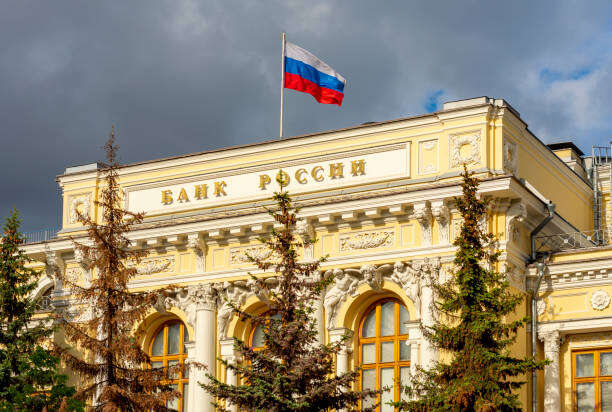
In recent years, states have increasingly relied on financial sanctions to address foreign policy and security challenges. Following Russia’s invasion of Ukraine in February 2022, the United States, the European Union, and the United Kingdom imposed more than 1,500 sanctions, including the freezing of approximately USD 300 billion in Russian Central Bank assets. Russia’s case is not exceptional: over the past two decades, the foreign reserves of Iran, Venezuela, and Afghanistan have also been subjected to freezing and seizure measures by the United States and the United Kingdom.
This expansion of financial sanctions—particularly those targeting central banks—is closely linked to the dominant role of the US dollar and a small number of other currencies in the global financial system. Control over these currencies enables sanctioning states to impose significant economic harm. Emerging markets have consistently contested such measures.
Sanctioned individuals have brought challenges before domestic courts and international tribunals. A recent report has identified 24 publicly known sanctions-related Investor State Dispute Settlements (ISDS) claims. While no ISDS claim has yet been brought by a central bank, concerns about potential investment claims have already shaped policy debates. Notably, Belgium expressed hesitation about EU proposals to use frozen Russian central bank assets to support Ukraine, citing the risk of ISDS litigation.
Existing scholarship has explored whether states and state-owned enterprises may qualify as investors under international investment law, generally hinging on whether the relevant conduct can be characterized as commercial rather than governmental. Central banks are core state institutions, responsible for issuing currency, conducting monetary policy, and regulating banks, which may suggest they fall outside the scope of investor protection. At the same time, many central bank functions—such as acting as banker to other banks and managing foreign reserves through investments in international financial markets—closely resemble commercial activities. This dual character raises the question of how central bank activities should be classified for the purposes of investment law.
Taking Belgium´s concerns seriously, the article seeks to categorise central bank activities and examines the circumstances under which a central bank may qualify as an investor. It builds on existing debates and assesses whether distinctions between governmental and commercial activity developed in the context of sovereign immunity are transferable to international investment law. In doing so, the article contributes to the study of economic statecraft by analysing central banks as geopolitical targets and by exploring how the weaponization of finance may reposition international investment law as a mechanism for protecting core state institutions.
Astrid Iversen is associate professor in law at the Scandinavian Institute of Maritime Law, University of Oslo.