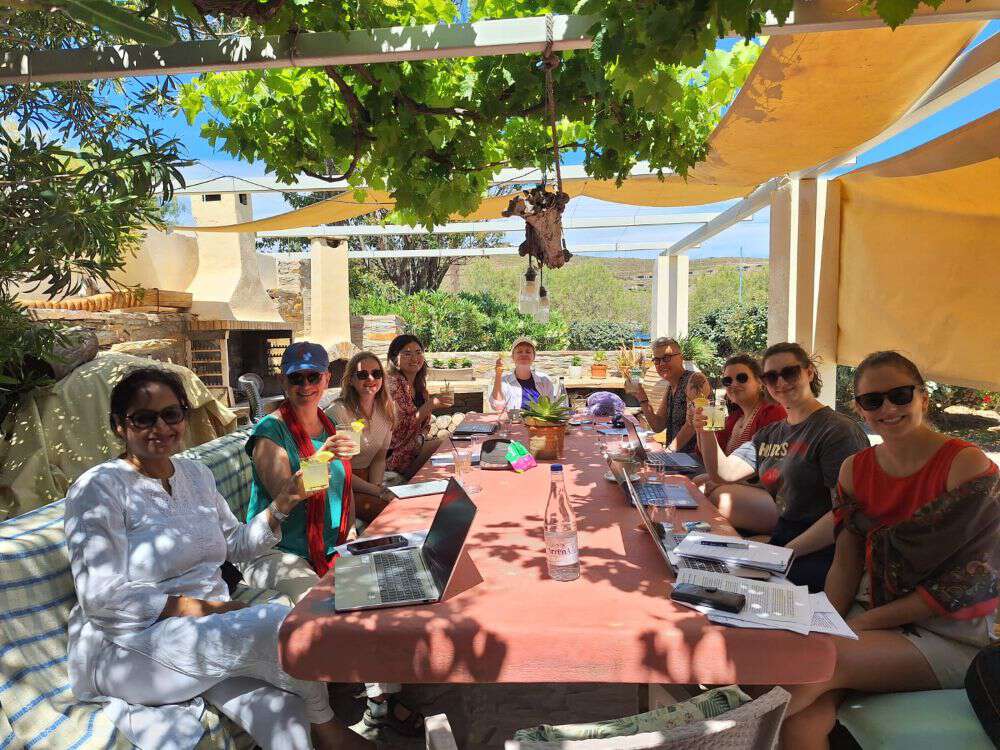
From 25 to 30 May 2026, a group of nine women scholars from different parts of the world - Brazil, India, Mongolia, Germany, the Netherlands, Italy and Norway - gathered on the beautiful island of Kea, in Greece, for the 11th Annual Workshop of the Daughters of Themis Network of Women Business Scholars. This year’s workshop was dedicated to the theme ‘Where is Justice in Corporate Sustainability?’.
Creating space for meaningful intellectual exchange
The workshop is designed to bring together a small group of participants selected through a highly competitive call for papers. The format allows each participant to receive careful and generous feedback on ongoing work, while also creating space for meaningful intellectual exchange, collaboration, and connection. More than an academic event, the workshop offers a genuinely supportive environment for women in academia: a space shaped by critical perspectives, feminist and decolonial approaches, and open conversations in which participants feel comfortable sharing ideas, doubts, and provocative feedback.
The richness of the workshop came above all from the diversity of the participants’ contributions. The papers approached the question of justice in corporate sustainability from multiple angles, including structural critiques of corporate sustainability law, feminist and postcolonial approaches to due diligence, workers’ rights, forced labour, grievance mechanisms, extractive harms, Big Tech, human rights in conflict, and alternative economic models. Rather than treating justice as a single or fixed concept, the discussions showed how it can be understood in many interconnected ways: as recognition, redistribution, participation, remedy, institutional design, and transformation.
Justice beyond current legislative approaches
This thematic variety created particularly stimulating conversations. Some contributions questioned the limits of the European Union’s regulatory frameworks, including the Corporate Sustainability Due Diligence Directive and the Forced Labour Regulation, especially when these instruments operate through risk-management, compliance, and product-ban logics. Others shifted attention to the lived realities of workers, women artisans, Indigenous communities, and marginalised groups in global value chains. The papers also broadened the field of corporate sustainability beyond the discourse on conventional companies, bringing into the discussion the solidarity economy and the role of cooperatives, drawing on feminist theory, ecofeminism, and the potential of reconceptualisation of human rights.
The workshop made clear that justice in corporate sustainability cannot be reduced to reporting, due diligence, or compliance. This requires us to rethink whose voices count, which harms are made visible, and what kinds of economic organisation law is willing to recognise.
A common thread running through the participants’ work was the idea of relationality: the understanding that law, markets, corporations, communities, and ecosystems are deeply interconnected, and that corporate sustainability must be oriented toward securing the social foundations for humanity and all other living beings within planetary boundaries.
Channelling radical hope
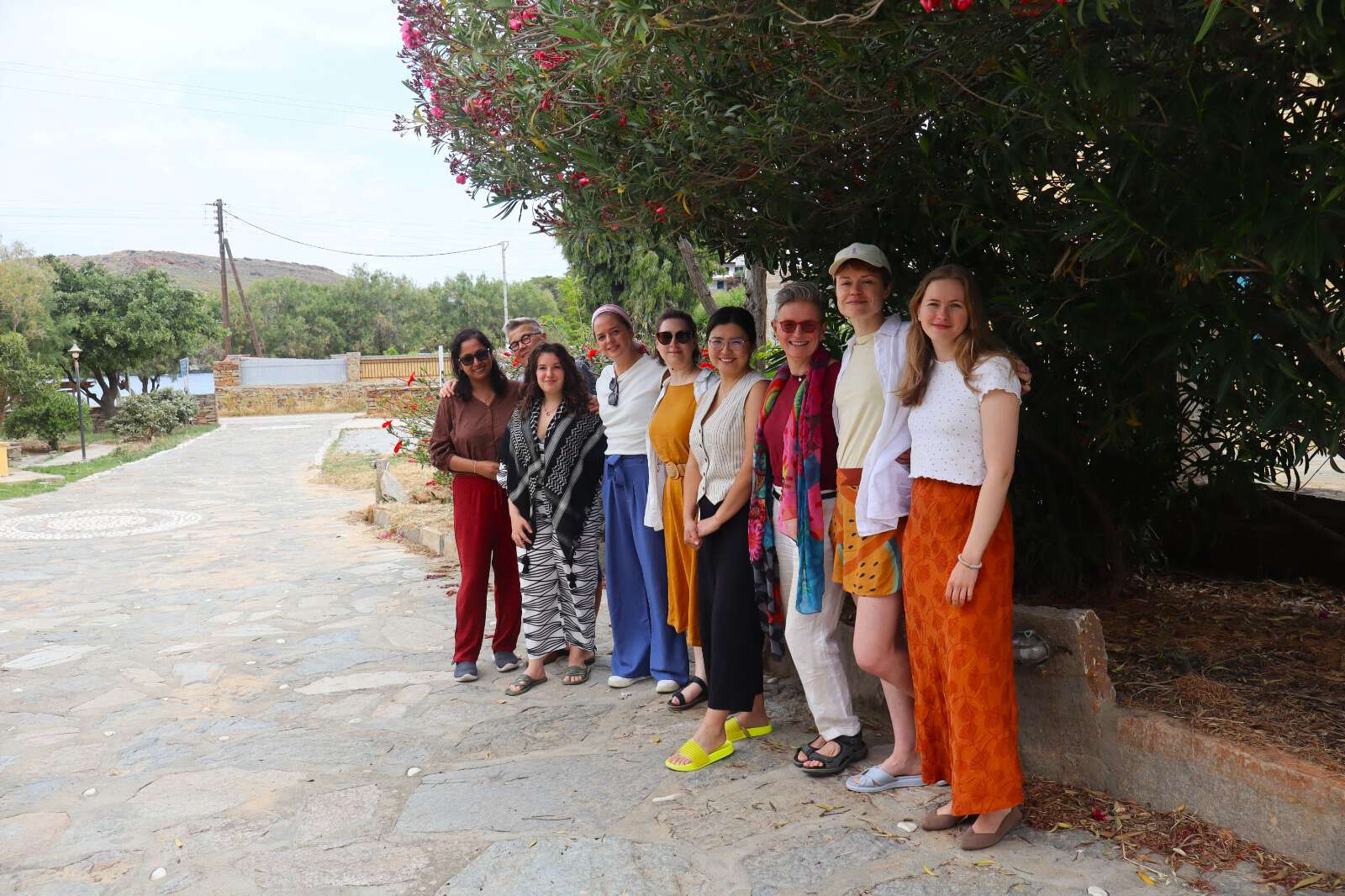
Despite the deeply critical perspectives brought by the participants, the workshop was marked by a sense of possibility, optimism and radical hope. We discussed not only the limits of existing legal frameworks, but also the seeds of hope that transformative, decolonial, and feminist interpretations of law can help identify and bring to fruition.
The final discussions turned to the future of the Daughters of Themis network itself, including ways to strengthen connections among members, make their work more visible, and expand the outreach of the network through greater engagement with public institutions, civil society, and broader academic communities.
More news to come!
*************
This news piece is written by Natália Figueiredo, with input from the other participants