This spring, the Centre for Global Sustainability was officially opened at the University of Oslo. The Centre is an initiative aimed at bolstering interdisciplinary research to promote sustainable development. Researchers from natural sciences, medicine, social sciences, and humanities are brought together to study topics like global health, consumption, energy and resources, democracy, and sustainability.
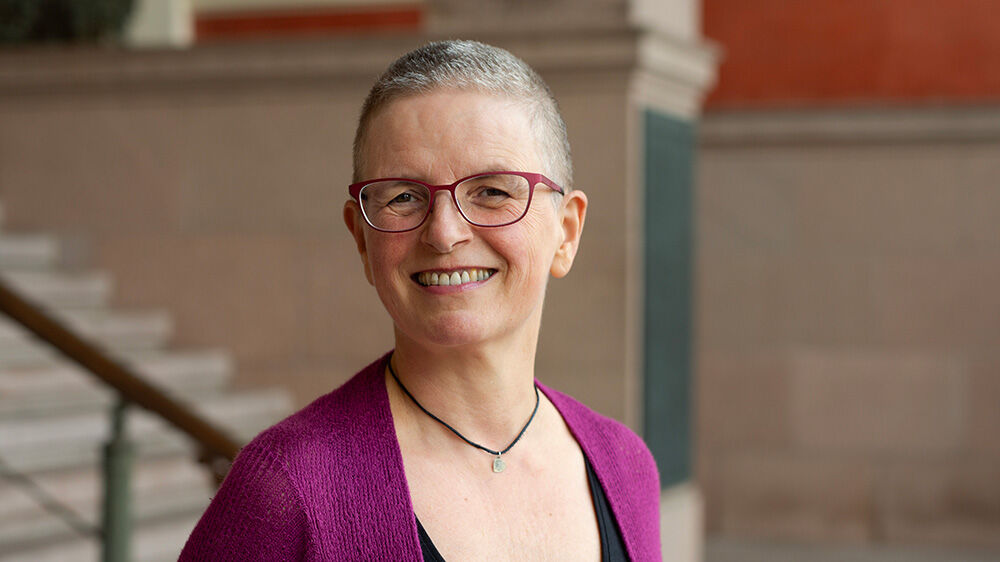
Among the members of the new Centre is Professor Beate Sjåfjell.
Law can play a crucial role
With Sjåfjell's interdisciplinary background in legal research within business law and sustainability, she aims to contribute to research, teaching, and dissemination at the Centre:
– I will do this together with my colleagues in the research group Sustainability Law, included in one of the Centre’s four thematic areas, ‘Knowledge, technology and trust’. We will also contribute to the thematic area ‘Democracy, governance and social justice’.
Sjåfjell has participated in and led research projects and groups within business law and sustainability at the Faculty of Law for years. All projects have served as cornerstones for the interdisciplinary research group Sustainability Law that she currently leads. The group's research has aided in identifying barriers to sustainability and opportunities for change within the business sector, which prompted their invitation to join the Centre from the start, Sjåfjell notes.
She asserts that law plays a pivotal role in realising a sustainable future:
– Law is one of society’s most important tools in the transformation to sustainability. Law establishes institutions and sets rights and duties. Law also contributes to shaping how we understand concepts such as ‘companies’, ‘human rights’ and ‘sustainability risks’.
A key figure in the Circle U. alliance
The law professor's dedication to expanding the international and interdisciplinary scope of legal sustainability research has yielded positive outcomes. In 2022, she was appointed Academic Chair in the European university alliance, Circle U., and is the only representative from the Faculty of Law in the alliance.
Circle U. places emphasis on teaching, and this spring they piloted the first cohort of interdisciplinary sustainability modules for students among member universities. Included among these were Sjåfjell's elective courses:
– Circle U. provides a fantastic opportunity to involve colleagues and students from other universities in my two sustainability-oriented electives, ‘Sustainable Business, Finance and Circular Economy’, and ‘Corporate Sustainability Law’, she shares.
The Centre’s website notes that, in terms of education, it will offer studies through collaborations such as the Circle U. alliance.
Influencing the Centre's development
Moving forward, Beate Sjåfjell will be affiliated both with the Faculty of Law and the Centre for Global Sustainability. Sjåfjell says she looks forward to working with fellow advocates for sustainability:
– I am so looking forward to working in an interdisciplinary and international research environment, coming together in our joint goal of contributing to sustainability. It is very exciting to be a part of this right from the start.
– I am also honoured to have been selected as a member of the board of the Centre, she adds.
During the Centre’s first board election, Sjåfjell was nominated and elected as a board member for the group of academically affiliated staff through dual affiliation or partial integration. Alongside her fellow board members, she will participate in steering the development of the newly established Centre.