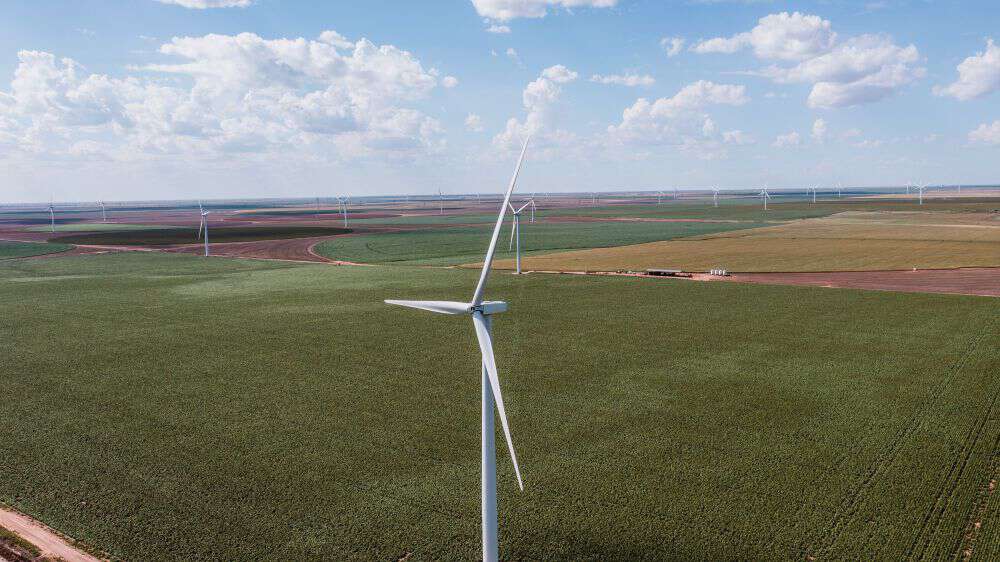
In the public imagination, the slogan ‘Don’t Mess with Texas’ evokes images and ideas closely linked with the state’s ‘Old West’ origins – frontier individualism and self-reliance, conservative resistance to externally imposed authority and values, and so on. In this light, many are surprised to learn that this slogan is, in fact, a reflection of homegrown Texas environmentalism. ‘Don’t Mess with Texas’ was first coined by the Texas Department of Transportation in the mid-1980s as part of an anti-littering campaign.
Over the years, this slogan has been widely promoted through anti-littering ads including famous Texas musicians such as Stevie Ray Vaughn, George Strait, Willie Nelson, and Post Malone. According to the Department of Transportation, the campaign has contributed to a significant reduction in littering across the state – delivering both environmental and economic benefits ‘for ourselves, our families, and our businesses’. As they sum it up, ‘We are a friendly state, and we are also a proud state. Let’s keep it clean.’
As the double valence of this popular Texas slogan suggests, opportunities to promote sustainability can sometimes arise in surprising terrain, and in unexpected ways. Indeed, similar dynamics are observable today as investment in renewable energy continues to ramp up. To the surprise of many, despite their long-standing investment in fossil fuel production and federal politics that strongly disfavour alternatives, Texas is becoming a national leader in production of renewable energy as well. Understanding how and why this happened has much to tell us about the complex and polarised politics of sustainability in the United States, reflecting the fact that opportunities for progress remain – if one knows where to look for them and how to assemble ideologically diverse coalitions to pursue them.
Renewables in the conservative Lone Star State
Most are aware that Texas is the #1 US state for fossil fuels, ‘producing 5.7 million barrels per day in 2024’. Fewer are aware that Texas is also the #1 wind power state and the #2 solar power state (trailing only California). Strikingly, ‘Wind and solar combined provide on average roughly 40% of the state’s electricity’ and, ‘In peak wind and solar conditions, about 75% of the state’s electricity emanates from these clean natural resources’.
Such an outcome would seem to fly in the face of contrary state and federal political forces. In most contexts, Texas state politicians have appeared allergic to anything associated with ‘sustainability’ or ‘environmental, social, and governance’ (ESG) investment policies. For example, Texas blacklisted asset managers that pursued climate policies perceived to be hostile toward fossil fuels, preventing state pension programs from investing their funds with them. This, combined with efforts of conservative activists, prompted those asset managers to back away from such policies. Meanwhile, at the federal level, President Trump – who enjoys strong support among Texas voters – has relentlessly opposed renewable energy investment, favouring continued reliance on fossil fuel production.
‘All-of-the-above’ energy policy
In light of these political realities, how can we make sense of Texas’ status as a national leader in renewable energy production? The short answer is that state-level economics strongly favour investment in wind and solar power. In Texas, ‘wind has become one of the least expensive sources of new electricity’, and several powerful constituencies directly benefit – farmers and ranchers who gain lease payments that supplement their agricultural income, local governments that gain tax revenues, and businesses that gain access to a cheaper and more stable supply of electricity. Such investment has ‘created thousands of jobs in the clean energy sector’ across Texas while ‘stabilizing the grid’, redounding to the benefit of households and businesses alike.
At the same time – and this is critical – there are perfectly coherent political narratives about the aims of such initiatives that conservatives can accept. Even though renewable energy investment is conceptualised by progressive proponents, first and foremost, as a means of reducing emissions – and even though conservative critics have voiced outright hostility toward ‘sustainability’ and ‘ESG’ as unacceptably ‘woke’ policy motivations – investment in wind and solar power advances policy priorities that are important to conservatives. Regardless of the emissions impacts, for example, proponents have sold such investment to the political right by ‘aligning clean energy with the language of energy security, economic development, and industrial renewal’.
This approach effectively side-steps political polarisation by emphasising that clean energy ‘advances affordability’, ‘promotes energy freedom’, ‘increases reliability’, and ‘drives job creation and economic development’. Despite staunch political opposition to reforms packaged by reference to sustainability, ‘a true all-of-the-above approach can now be sold in state capitals throughout the country, in red states and even in fossil-fuel producing states’, generating benefits that resonate with left- and right-leaning voters, respectively. This works only because the packages of benefits that progressives and conservatives identify are fundamentally consistent with their deeply held, if very different, political identities.
The art of the possible
It is difficult to imagine a less favourable political environment for sustainability reforms than we currently face in the United States. Yet, as I explore in my current book project titled Corporate Sustainability Reform in the US: A Path Forward (Oxford University Press, forthcoming), these and other practical opportunities to promote sustainability remain viable – if we can learn how to recognise them and how to present their considerable benefits to diverse political constituencies.
In the near-term, it is not essential that progressives and conservatives agree on why these initiatives make sense – it is enough that they line up together behind these policies, even if they do so for distinct reasons. It is possible, however, that capitalising on alignments of this sort could facilitate more robust efforts in the long-term, particularly given research findings indicating that concrete cooperative action toward a shared goal is one of the few effective means of reducing political polarisation.
To the extent that politics amounts to ‘the art of the possible’, second-best approaches may have to do for the time being. But the upsides are real, and this accordingly presents a path that is well worth pursuing.
*******************
This blog post is based on the paper to be presented at the conference Sustainability Law: Law’s Response to the Convergence of Crises, 16-18 September 2026, at the University of Oslo