Does Equinor’s net zero ambition represent a genuine transition away from fossil fuels? Or is it primarily a sustainability narrative that allows continued oil and gas production under evolving regulatory expectations?
2026
Governments can tackle the climate crisis more effectively by using what they already have, learning as they go, and addressing many challenges together instead of one by one.
As sustainability is a disputed matter across company law, bankruptcy, antitrust, and financial regulation worldwide, we ask not just whether legal change should happen, but how and why it does.
The developing scope of international due diligence obligations could make China legally responsible for the environmental and climate harms caused by Chinese state-owned enterprises in Belt and Road projects abroad.
The growing asymmetry in the EU’s regulation of corporate and financial sector sustainability risks threatening the coherence and effectiveness of the EU’s transition to a more sustainable economy.
The future of sustainable lending depends less on who the creditor is than on whether borrowing states have a real say in the rules, contracts and conditions that shape their own development.
Mediation can give greater legitimacy to green transition policies by helping institutions engage conflicts before resistance hardens and, thus, allowing affected communities to shape the choices that transform their lives.
Brazil’s constitutional protection of Indigenous territorial rights is not only a matter of historical justice: it is also a key part of the legal infrastructure for protecting forests, biodiversity and the climate.
As most of Europe's 2050 building stock has already been built, the real sustainability challenge lies not in creating digital information for future construction but in governing informational continuity across the fragmented and evolving lifecycles of existing buildings.
Studying the Global North from the perspective of the Global South exposes how environmental responsibility is often obscured by geographical distance and unequal structures of knowledge production.
Brazil’s new Sustainable Taxonomy shows how the State can redesign the rules that shape corporate behaviour, not just punish companies for breaking them.
Texas’ rise as a renewable energy leader shows how sustainability progress can emerge across political divides.
European environmental law cannot achieve genuine sustainability transitions without confronting the colonial legacies and power asymmetries embedded in its regulatory frameworks.
The EU addresses heightened due diligence in the CSDDD and mineral supply chain regulation, however current legislation has yet to fully reflect the conflict-sensitive approach developed in international frameworks.
Despite their significant contributions, Indigenous women in Nigeria and Brazil remain marginalised, hindering effective climate governance and gender mainstreaming efforts.
We cannot code our way out of a crisis that code itself perpetuates. Conversely, genuine sustainability begins when we stop asking what technology can do, and start asking what it should do.
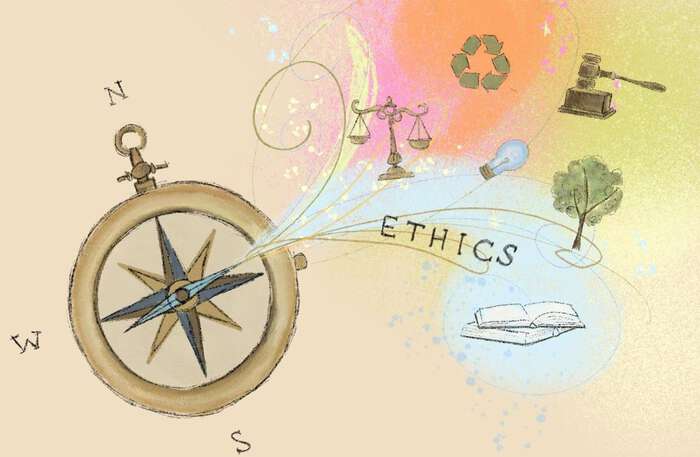
In a fragmented and uncertain world, can ethics give sustainability law a direction?
The Democratic Republic of Congo’s poverty is not accidental, it is the product of a centuries-long legal architecture built by colonial powers and maintained today through international trade deals, corporate supply chains and deliberate geopolitical destabilisation.
Drawing from an energy justice lens as a starting point of critical reflection, the blog post questions the AI infrastructure developments in Greece and Italy – two European countries united by similar climate and energy conditions.
Sovereign climate-tagged loans from multilateral development banks reproduce the austerity conditions that contradict the Paris Agreement’s just transition commitments and entrench Global North–South inequalities.
The success of human rights and environmental due diligence depends on a decentralised enforcement model where a plurality of actors, public and private, have a role to play.
The transformative promise of Rights of Nature lies not in their legal recognition alone, but in how they operate within complex governance systems.
Colonial-era international trade agreements and rules continue to perpetuate global inequalities, hinder climate action in the Global South, and block genuine climate justice.
Climate litigation is no longer aimed only at major emitters. It is increasingly turning towards banks and financial institutions, on the premise that those who finance fossil-intensive activities may also bear responsibility for delaying the transition.
In shareholder-centred jurisdictions such as the UK and US, corporate law recognises no duty to the climate - only to the corporation - yet by treating climate risk as financially material, it turns mitigation into a compulsory act of risk adaptation that boards can no longer ignore.

Blogging for Sustainability
Blogging for Sustainability is coordinated by the research group Sustainability Law.
We welcome guest bloggers! Contact our Editorial Team at contact-sustainabilityblog@jus.uio.no.