In her latest article, Pakistan’s Judicial Engagement with International Refugee Law, Arjumand Bano Kazmi examines how Pakistan's judiciary engages with international refugee law despite its non-signatory status. The article was published in the International Journal of Refugee Law.
Read the full research article
What defines a refugee as 'illegal'?
– Pakistan is not a signatory to the 1951 Convention, and it does not have any national laws on refugees. However, the country has been hosting refugees for many years, especially Afghan refugees, Arjumand Bano Kazmi says.
Although Pakistan has a long history as a host country, there has been a shift in the country's perception of refugees. In October 2023, the government launched a mass deportation policy known as the 'Illegal Foreigners’ Repatriation Plan.' This entails three phases of deporting or forcibly repatriating refugees and other migrants to their home countries. The first phase targeted refugees and other migrants lacking valid identity documents.
– The government's stance is that this policy applies to all migrants who do not have valid documents, but we know from various media sources that the policy is mainly targeting Afghan refugees, who are sent back to Afghanistan in large numbers, Kazmi explains.
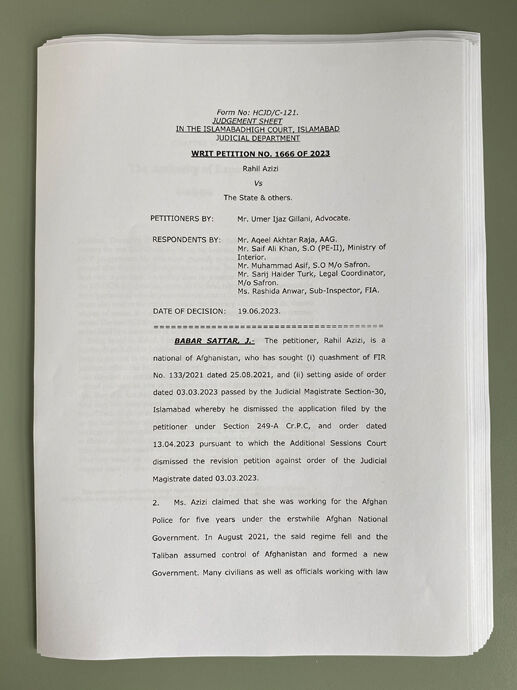
The repatriation plan applies to 'illegal' foreigners. Kazmi's research article stems from her desire to investigate what defines a refugee as 'illegal' in the context of Pakistan.
– When looking into the case law, I found that there has been a recent case from June 2023 that considers the question of illegality. Rahil Azizi v The State is the first case law in Pakistan's judicial history that mentions the 1951 Refugee Convention, Article 31, which deals with the illegal entry of refugees, Kazmi says.
Can enhance refugee rights in Pakistan
Kazmi explains that when a forced migrant crosses a border to escape persecution and violence, they often lack valid identity documents. What was unique about the Azizi case is that when Azizi entered Pakistan in 2021, she went straight to the police and declared that she did not have valid identity documents. Kazmi argues that this made it possible for the High Court to apply Article 31 of the Refugee Convention.
– To make a consolidated argument that Pakistan has a responsibility to protect refugees, the Court applied Article 31 of the Refugee Convention. They also used the Constitution of Pakistan, international treaty obligations of Pakistan, and the principle of non-refoulement, she says.
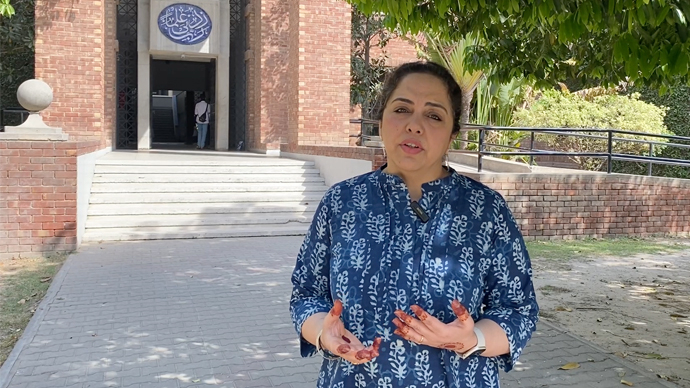
Kazmi emphasizes that although Pakistan is a non-signatory state, this case law represents the first High Court judgement referencing the 1951 Convention. This precedent can enhance refugee rights in the country.
– The High Court judgement set a precedent for the rest of the High Courts and lower courts to protect refugees. It speaks directly to the need to consider domestic laws and international norms of refugee protection harmoniously and not as mutually exclusive statutes to be applied without regard to the surrounding circumstances.
– The substantive guidance given to the State on how best to govern the asylum system, will hopefully change the situation for many refugees in Pakistan, Kazmi says.