
Unsustainable amounts of waste are produced and are being ‘wasted’ each year. In the European Union (EU), nearly 40 per cent of waste remains unrecovered and is either landfilled, incinerated without energy recovery, or disposed of in other ways. At the same time, resources are running out. This year, the date when humanity’s demand on Earth’s nature went beyond its capacity to regenerate during a year – so-called Earth Overshoot Day – was on 24 July 2025.
Both resource and waste management have impacts beyond environmental issues. Social consequences include detrimental effects on public health. For example, recycling and incineration can address resource issues, such as reducing demand on land and promoting the recovery of resources. But, they also cause air pollution and increase cancer risks for residents near plastic recycling plants. There are also inequities and inequalities in waste management. Low-income and minority groups, for example, are disproportionately impacted and often located near waste management facilities that can harm health.
One of the ways to address these concurrent resource and waste crises, including social issues, is by transitioning to a circular economy. A circular economy is based on minimising resource consumption and the generation of waste. Only where this is unavoidable should resources and wastes be reused, recycled, or recovered. A circular economy can occur at different levels – from product to company to city to national levels and beyond – with the purpose of achieving sustainable development.
The EU has actively promoted the circular economy since 2015 when it adopted its first Circular Economy Action Plan. The EU has adopted many actions since, including an updated Circular Economy Action Plan in 2020 and is currently calling for evidence and feedback for a Circular Economy Act it plans to propose.
What is circular public procurement?
There is no silver bullet to achieve circularity. Instead, various legal tools and measures will be required. One of these gaining attention and identified in the EU’s most recent Circular Economy Action Plan, is public procurement. In particular, circular public procurement can be an enabler of public procurement for promoting the circular economy. Circular public procurement is the process by which public authorities purchase work, goods, or services that incorporate circular economy principles.
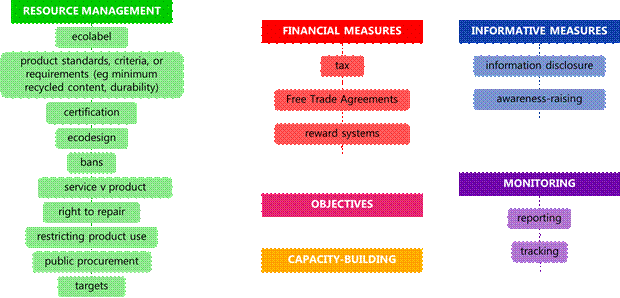
Circular economy public procurement is different from sustainable, green, and low-emissions public procurement. These all encapsulate environmental dimensions, but have different foci. Sustainable public procurement is broad and covers environmental, social, and economic dimensions; green public procurement aims to procure with reduced environmental impact throughout the goods’, services’, or works’ life cycle; and low emissions public procurement centres on emissions reductions. Circular public procurement should not replace these other types, but should co-exist to ensure issues concerning minimising resource use and waste generation for sustainable development remain focal points.
Justice is missing
There is no single agreed-upon definition for circular public procurement. Both academics and practitioners generally integrate environmental considerations of public procurement processes into their definitions. Economic dimensions in relation to the competitive pricing of the work, goods, or services to be purchased are sometimes included. Yet, social dimensions are consistently missing. This is an issue with many definitions of the circular economy, including the one set out by the EU in the Taxonomy Regulation.
Often, the ways in which circular economy principles are implemented focus on recycling and sideline, for example, reducing resource use and consumption in the first place. Including social and equity considerations can help avoid the pitfalls of perpetuating ‘same-but-circular’ business models. Social and equity considerations will also enhance legitimacy of a circular economy transition and avoid worsening many long-standing distributional, recognition, and procedural injustices.
Some scholars use the term sustainable circular economy to emphasise and incorporate the social aspects into the circular economy concept. Similar arguments can be made for having the concept of sustainable circular public procurement.
(Circular) public procurement in the EU
Public procurement laws at the EU level take wider sustainability considerations into account, including environmental protection. Since 2014, the EU Public Sector Directive has allowed the use of a life-cycle costing perspective as a method for awarding public contracts. This tool has the dual effect of identifying not only the cheapest but also the least environmentally impactful offer in the long term. It is in addition to the other opportunities within the Directive to integrate environmental criteria throughout various stages of the procurement process.
In EU environmental laws, there are increasing mentions of public procurement. For example, in the Waste Framework Directive, the cornerstone of EU waste law, it is listed as one of the ways in which prevention and reuse can be promoted. This is a relatively weak reference, but one that supports the inclusion of public procurement in the conversation on legal tools. There are some laws with stronger links to public procurement. The Shipments of Waste Regulation uses procurement as a penalty. The consequence of not complying with the Regulation is that a company may be excluded from public procurement procedures for a specified period.
An opportunity for circular public procurement
More rules will be adopted within the EU on public procurement. The Ecodesign for Sustainable Products Regulation, for example, provides that contracting authorities and entities have to award public contracts complying with minimum requirements that are to be set that ‘incentivise the supply of and demand for environmentally sustainable products’, with delegated acts to be implemented over the coming years. Other more sector-specific laws have similar requirements. The Packaging and Packaging Waste Regulation as well as the Batteries and Waste of Batteries Regulation both require implementing and delegated acts respectively to be adopted over the following years to set public procurement requirements.
These changes in laws through delegated and implementing acts are likely to be mostly technical to clarify the (breadth of the) scope of the public procurement rules. They are currently therefore not expected to change the nature and strength of the obligations. They nonetheless provide an opportunity to rectify past omissions by developing requirements to put social issues at the forefront of circular public procurement. By putting equity and justice alongside environmental impacts, circular public procurement requirements can help shape a more holistic circular economy agenda. This will support putting the concept and its implementation ‘back on track’ and away from being reduced to promoting reuse and recycling.
***********************
This blog post is based on the paper presented at the SMART Network Symposium, Sustainability is (Still) Possible! Governing Market Actors for a Safe and Just Space, 18-19 September 2025, at the University of Turin.