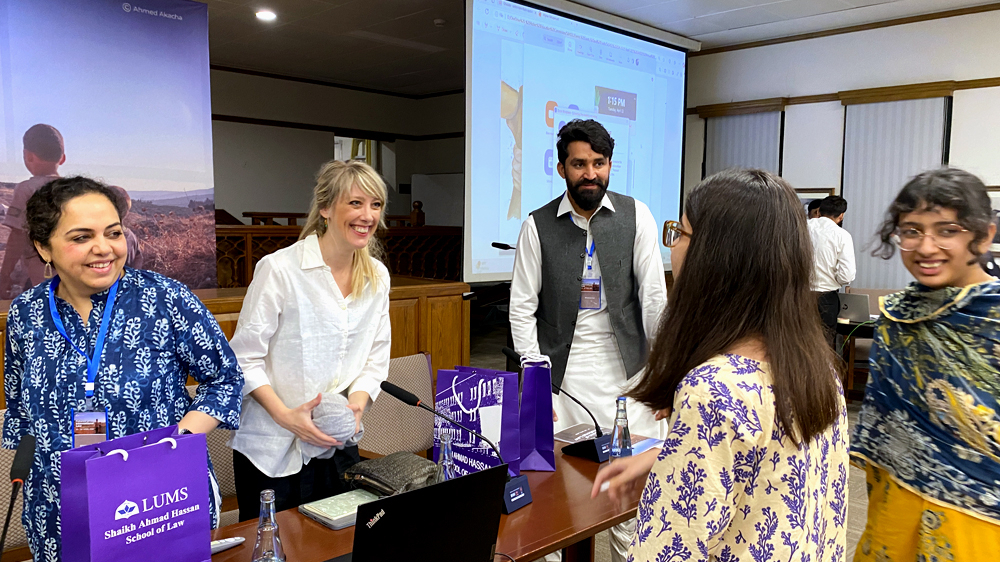
The Futures of International Law conference was held on April 21-22, 2025, at Lahore University of Management Sciences (LUMS) in Lahore. During the event, the BEYOND team convened a panel focused on non-signatory states in international refugee law. Dr. Arjumand Bano Kazmi was one of the panel speakers, presenting her research on Afghan refugees in Pakistan.
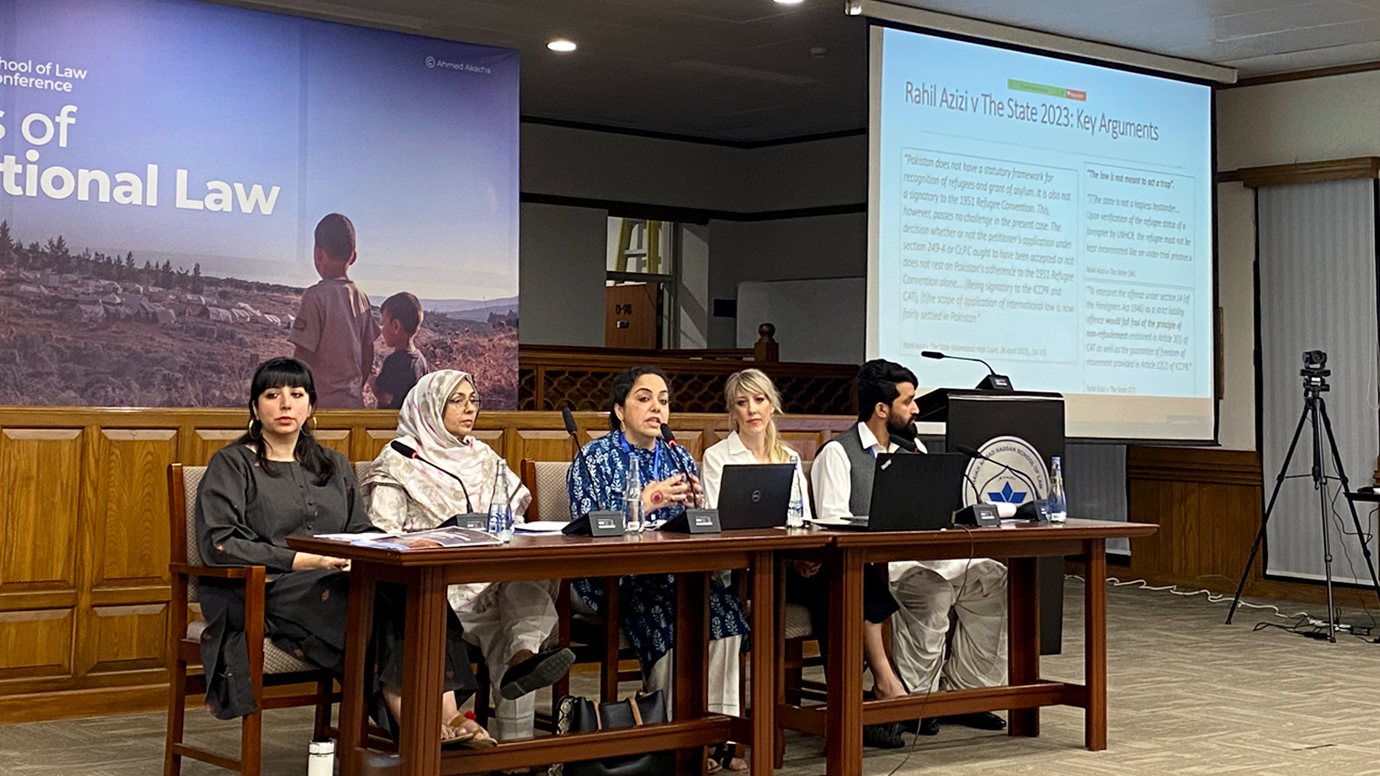
– The 'Illegal Foreigners Repatriation Plan' implemented by the Pakistani government claims that there are no refugees in Pakistan. In their eyes, all refugees are illegal. However, the High Court's case law contrasts with the restrictive policies, Kazmi explained to the audience.
Kazmi's article, Pakistan’s Judicial Engagement with International Refugee Law, examines the case Rahil Azizi v The State to explore how Pakistan's judiciary engages with the Refugee Convention despite its non-signatory status. Illustrating how the High Court engages with the Refugee Convention beyond applying non-refoulement, the Azizi case is significant because it provides a precedent for other courts in the country.
– One can hope that with this precedent, there will be future cases broadening the scope of protection for refugees in Pakistan, Kazmi said.
– Forced returns will not do anyone a favor
The conference not only brought together scholars and students focused on the issues and future of international law, also practitioners participated. On the panel convened by the BEYOND team, the United Nations High Commissioner was represented by Ms. Ghazala Mirza. Sharing her experience as a practitioner, Mirza argued that a balance must be struck between a humanitarian and a security perspective.
– Pakistan has a restrictive asylum policy, but the country also has a responsibility and international obligations it needs to follow. We have to have a protection mechanism in place. Forced returns will not do anyone a favor, Mirza stated.
Pakistan is one of the four case studies of the BEYOND project, along with Türkiye, Lebanon, and Bangladesh. During the panel, BEYOND’s Principal Investigator, Professor Maja Janmyr, presented the project’s focus, research questions, and preliminary findings.
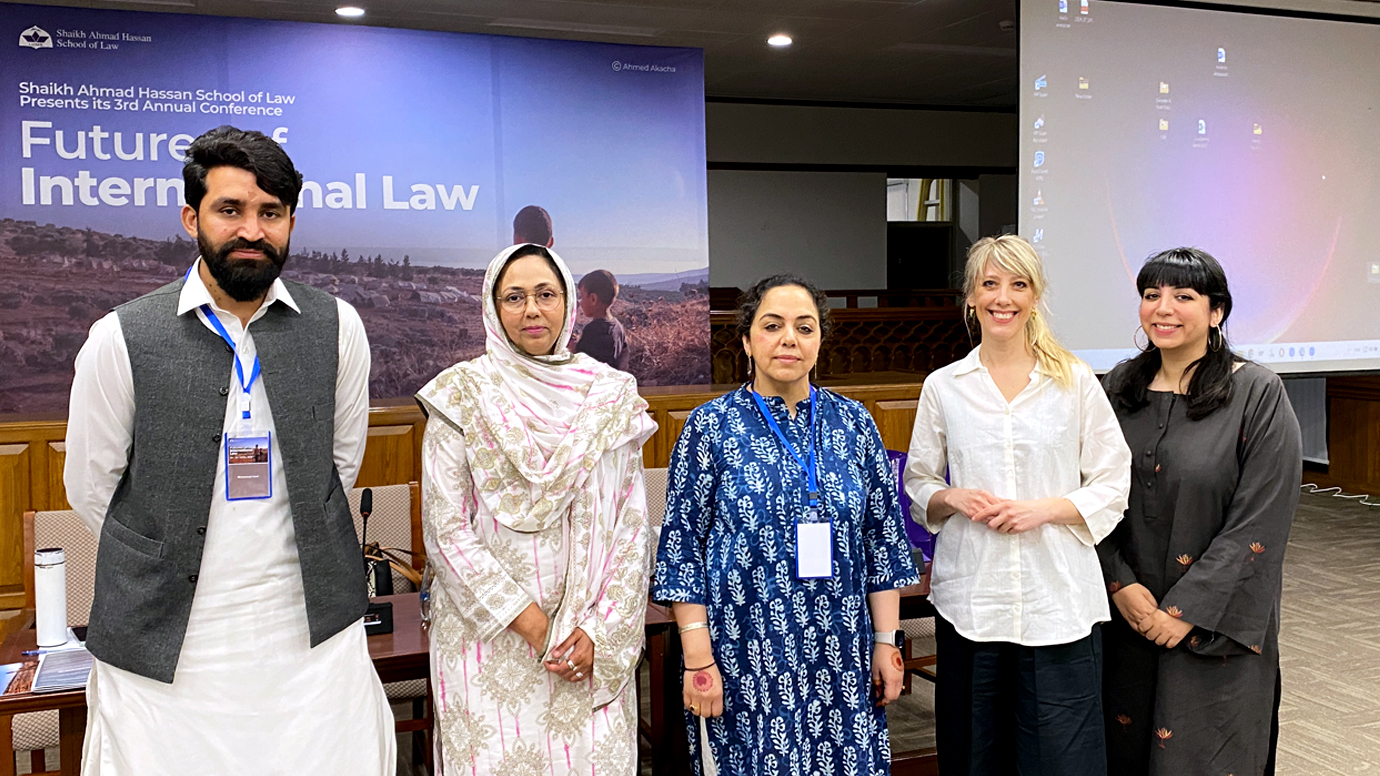
– We aim to bring non-signatory states into the ongoing debates about the past and future of the Refugee Convention and of international refugee law more generally, and to instigate further debate on the broader workings and impact of international law, beyond treaty ratification, Janmyr said.
She then turned to the audience, consisting of legal students and scholars, to emphasize the necessity for increased research in this field.
– We have merely scratched the surface of this research topic. We need your help to engage with this work and the subject of states non-signatory to the Refugee Convention, Janmyr declared.
The relevance of the 1951 Convention
In addition to disseminating BEYOND's research in Lahore, the team organized a roundtable in Islamabad to discuss the sensitive and political issue of refugee governance in Pakistan. The roundtable brought together representatives from a range of state ministries, international organizations, as well as civil society organizations and academics.
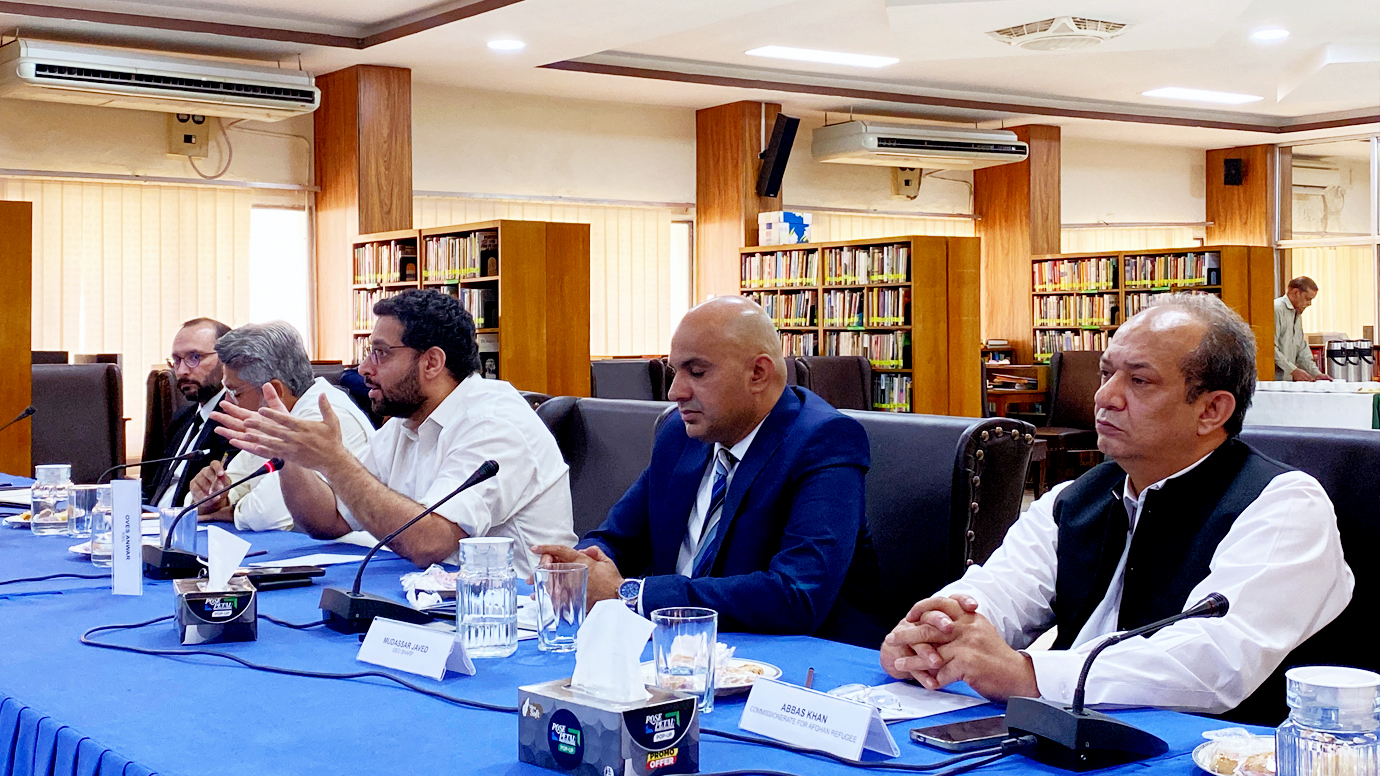
– This is the first time that key actors with diverse perspectives are coming together on this issue. With the current repatriation plan, there are many conflicting opinions and misunderstandings. We wanted to create a space to address these issues, Kazmi said.
Read more about the Islamabad roundtable here.
As a final step in the series of events in Pakistan, BEYOND scholars took part in a two-day conference in Karachi, organized by the Pakistan Institute of International Affairs. The event took place on April 26-27, 2025 and was titled ‘Seventy Years After Bandung: The Struggle Continues’. The conference’s starting point was the Bandung conference in 1955, which was the first large-scale meeting of mostly newly independent Asian and African states.
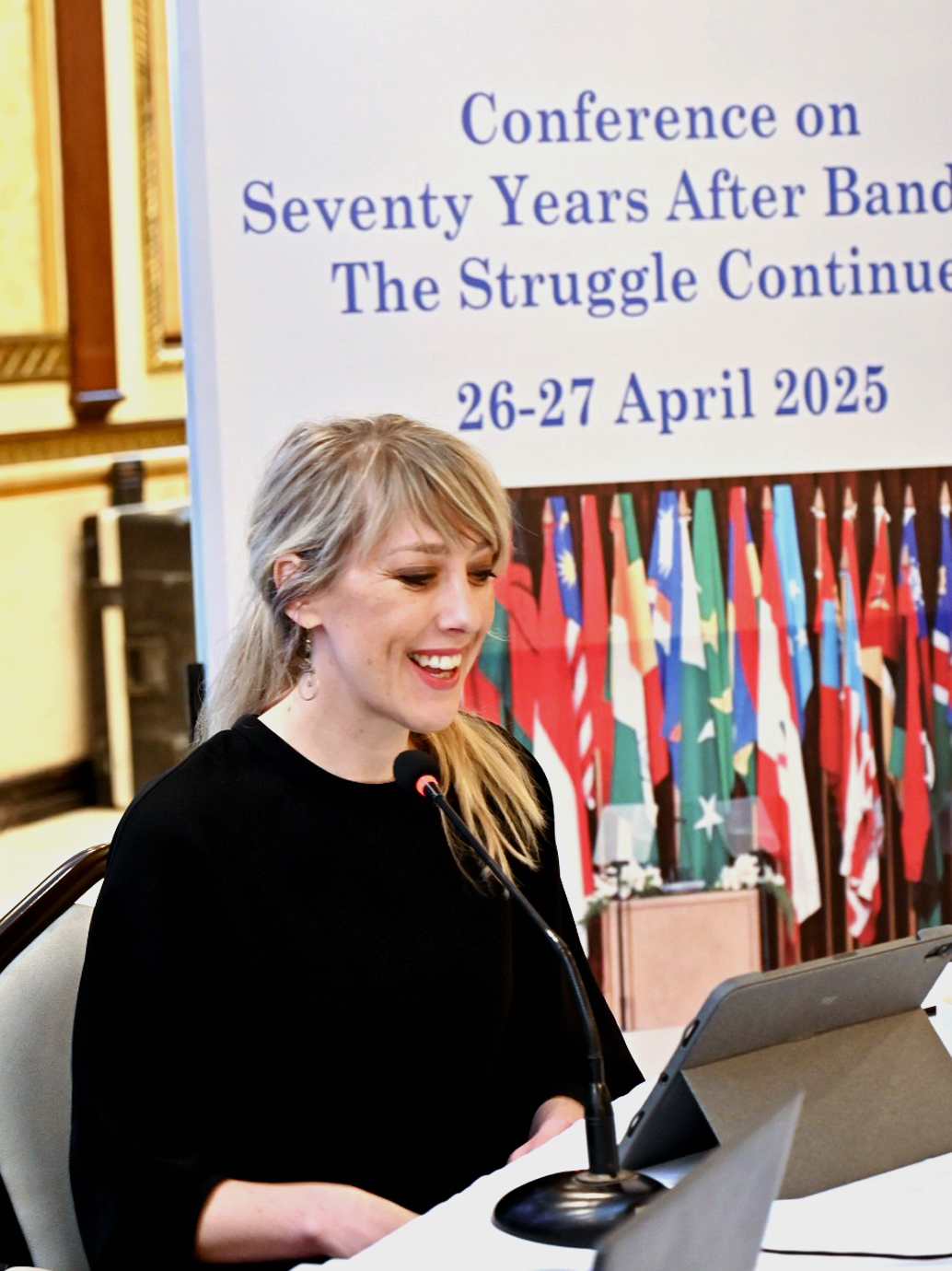
The conference covered topics on decolonization, the challenges faced by the Global South, environmental degradation, global peace, and human rights. Dr. Arjumand Bano Kazmi and Professor Maja Janmyr participated in a panel assessing the relevance of the 1951 Convention. They focused their presentation on the need to empirically explore how refugee-hosting non-signatory states engage with international refugee law.
– Our research so far shows that the Refugee Convention not only continues to be relevant, but that it also plays important roles in shaping responses to refugees in many non-signatory states, Janmyr said.
The strong turnout at the three events in Lahore, Islamabad, and Karachi, with participants from diverse disciplinary backgrounds, reflects a growing interest in refugee rights. Kazmi hopes that BEYOND's research will stimulate further exploration in this field.
– We believe to have meaningfully contributed to the ongoing discussion, highlighting the legal dimensions of refugee protection within broader social and political realities. We hope our research will not only inform Pakistan’s policy at this critical juncture but also inspire continued academic inquiry, Kazmi said.