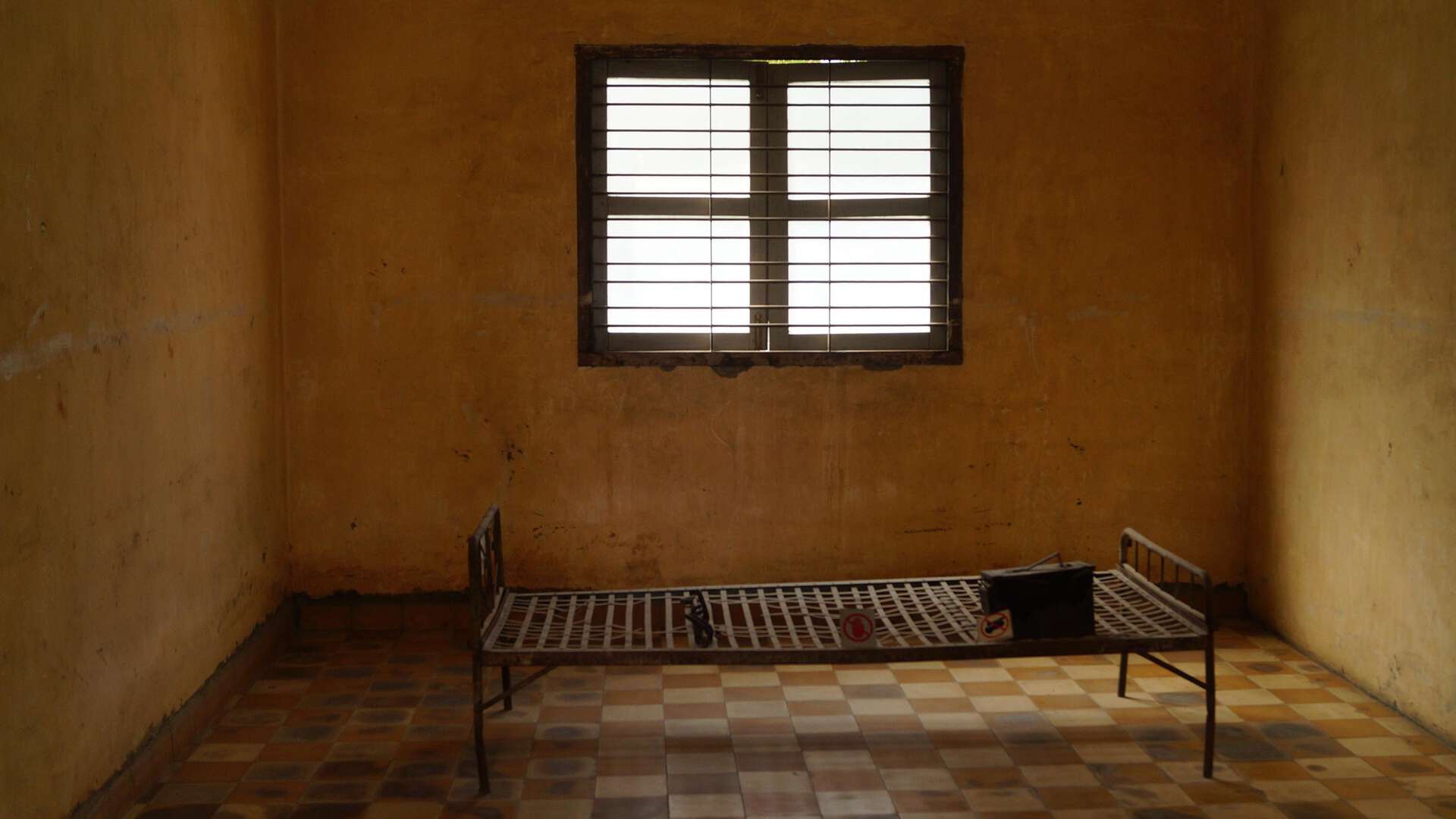
Bodies and human remains are a key source for forensic scientists to produce evidence for the legal prosecution of state crimes and atrocities. But bodies are often absent or missing. Tackling this absence is crucial, because sites of violent conflict remain affected by enforced disappearances, burials at unknown and hidden locations, which impedes criminal prosecution and creates agony for victims’ family members and entire societies.
– The long-term consequences of not knowing what has happened to a family member can be devastating. The family of Imam Haron, a man murdered by South Africa’s apartheid police in 1969, had to wait until 2024 to find out what really happened to him, says Robyn Gill-Leslie.
Robyn is a postdoctoral candidate on the Bodies of Evidence project and together with project leader Mareile Kaufmann she has edited a special issue in the Journal Human Remains and Violence. The issue problematises, amongst other things, different forms of absent bodies and their implications.
In places where political repression is still a danger, uncovering historical sites of violence can be extremely challenging. Shari Eppel works as a forensic anthropologist in remote rural locations in Zimbabwe. In her article she explains the difficulty of even finding a body to exhume when she searches for victims of Zimbabwe’s massacres in Matabeleland. Through a combination of careful relationship-building with local communities and testimony investigation, Eppel works in the midst of fear, repression and her biggest enemy – time – as witness memories and physical landscapes containing graves change and shift.
– Finding graves of those killed in in remote locations, like those murdered by apartheid’s security forces, is difficult, explains Robyn.
– Landmarks that witnesses could remember may have changed over time, trees have been cut down, bushes cleared, agriculture shifted.
Geography and landscape are also of key concern when local communities become victim to extractive capital through mining. Dineo Skosana and Amanda Esterhuysen discuss the very problematic practice of grave relocations in South Africa’s coal and platinum producing areas. Detailing the interactions between communities and the extractive industries, Skosana and Esterhuysen question corporate negligence. A crucial aspect is here the spiritual dimensions of grave relocations as burial places represent active, ancestral presence.
– Through this entire project I have learned about the importance of a spiritual framework, that includes understanding how the cosmology of communities is affected by a range of actors, says Mareile Kaufmann. She has co-organised a writing workshop for this special issue in Johannesburg.
– Across southern Africa we can find examples of spiritual intercessors claiming that the ancestors have guided them to previously unknown grave sites of historical violence. These examples require our attention.
The absent body remains a powerful framework for understanding the political, social and cosmological wounds created by cycles of violent death in southern Africa. Communities that have suffered through long-term, cyclical violence – like in South Africa and Zimbabwe – continue to wait for truth recovery and knowledge of what happened to their loved ones. The special issue Shifting perspectives: ‘bodies’ of evidence inside violent landscapes also points to the multiple actors that contribute to post-atrocity investigations, including both forensic and spiritual practitioners. Perspectives that focus on the restoration of dignity and the building of community can move societies closer to repair.
– In addition to the critical points made by the authors, this affirmative angle is also something we wish to communicate to the issue’s readership, says Mareile Kaufmann.