
Building resilience and supportive networks, and forging broad professional alliances has never been more crucial, emphasized Gentian Zyberi, Head of Department at the NCHR and acting Master program coordinator, as he opened the 2025 Alumni Event. With rising uncertainties and pushbacks in the human rights field, such measures are important for facing these significant challenges.
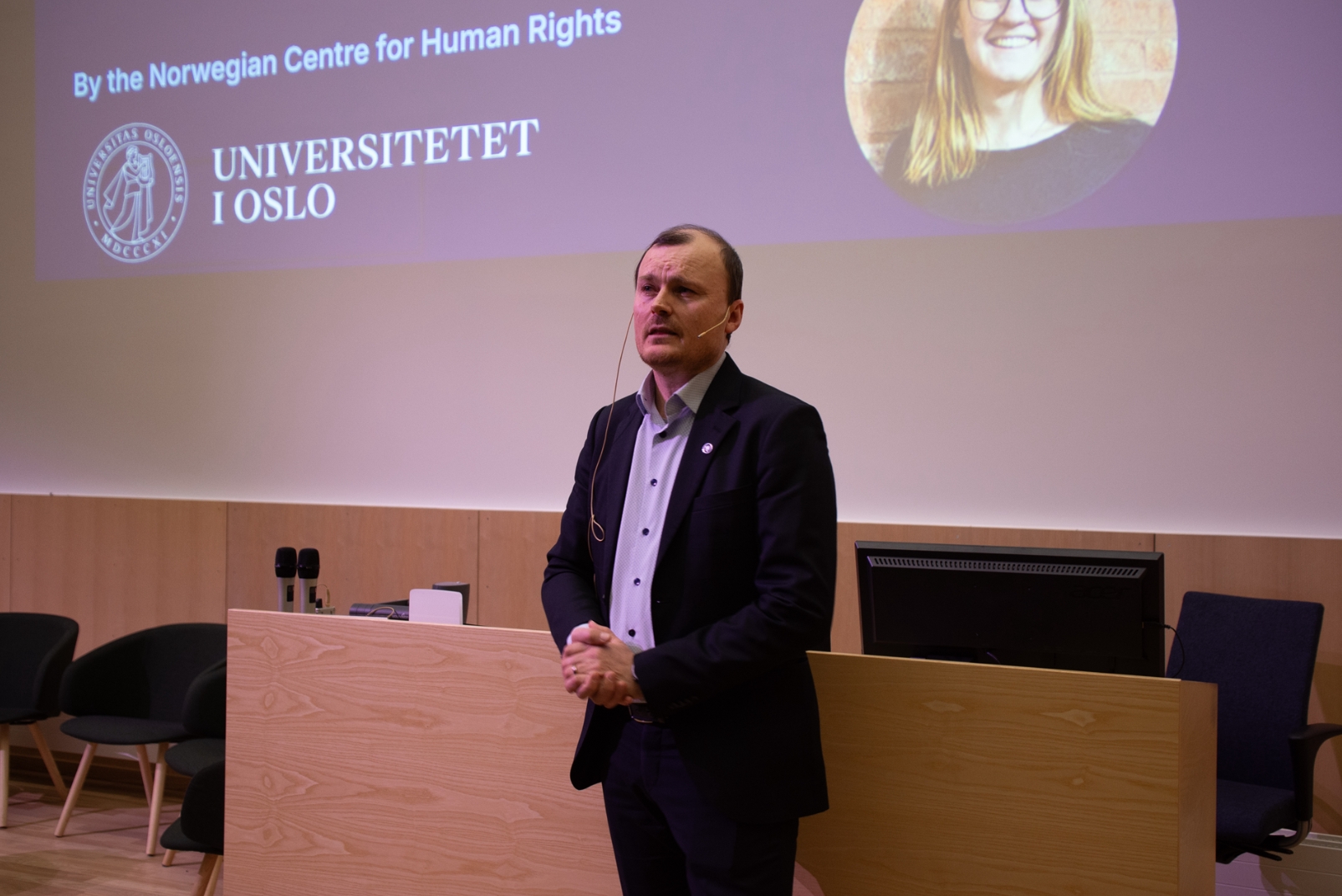
For event organizer Elise Sandvik, a student herself, the current world-picture raised an important question: How do we prepare students for an unpredictable future? Sandvik notes:
– We may have limited influence over the global order, but what we can shape is what we create and contribute to, and this event is a key arena for exactly that.
Throughout the event, students engaged with alumni who have successfully navigated the transition from academia to practice.

Nika Arevadze, Sustainability Manager at Yara International, shed light on both the opportunities and challenges in the field. He highlighted the internal and external hurdles within organizations but highlighted several opportunities within this framework. He further advised on translating academic knowledge into practical competencies.
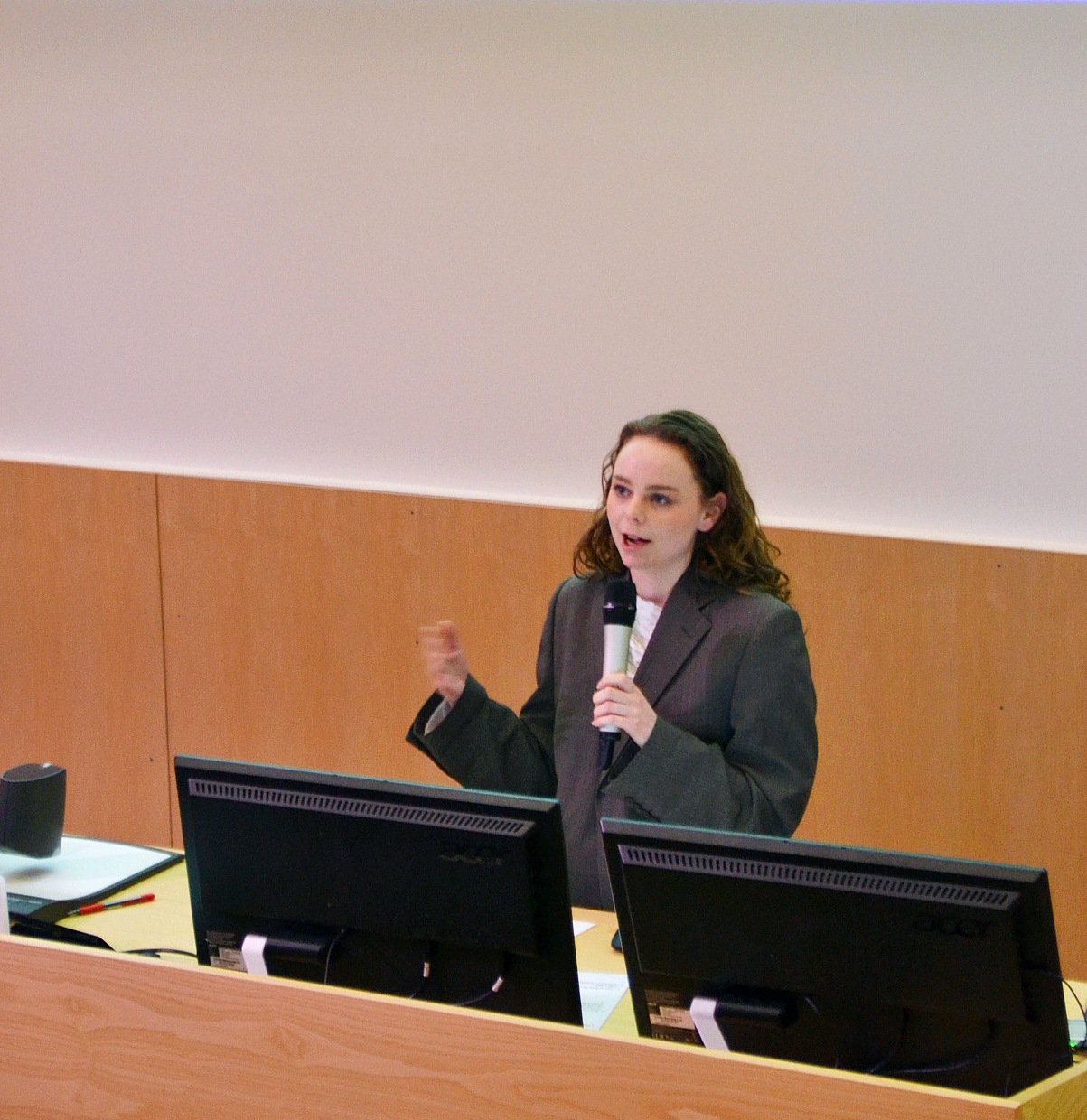
Caroline Zwingelstein, Project Advisor at the Norwegian Refugee Council, underscored the importance of transferable skills, diversifying networks, and broadening job search strategies. She equipped students with tools to refine their applications and enhance their competitiveness in a crowded job market.
Sunniva Fredstad, Senior Executive Officer at the Norwegian Centre for Human Rights, provided a candid glimpse into her work life. While international travel stood out as a highlight, much of her role revolves around report writing and other administrative tasks. She also shared first-hand tips on job applications and interviews.

Eduardo Sánchez recounted his journey from student to his current role in the Legal and Compliance Division at Norwegian Church Aid. Drawing from personal experience, he stressed the importance of networking and volunteering.
Brady Flynn, Human Rights Advisor at Position Green, offered practical advice on thesis writing and pointed to research gaps, such as the implementation of CSRD and the intersection of business and human rights in conflict zones.
Later, a panel discussion brought alumni together to delve deeper into their experiences. Students could anonymously submit questions via a QR code—a feature Sandvik found particularly insightful.
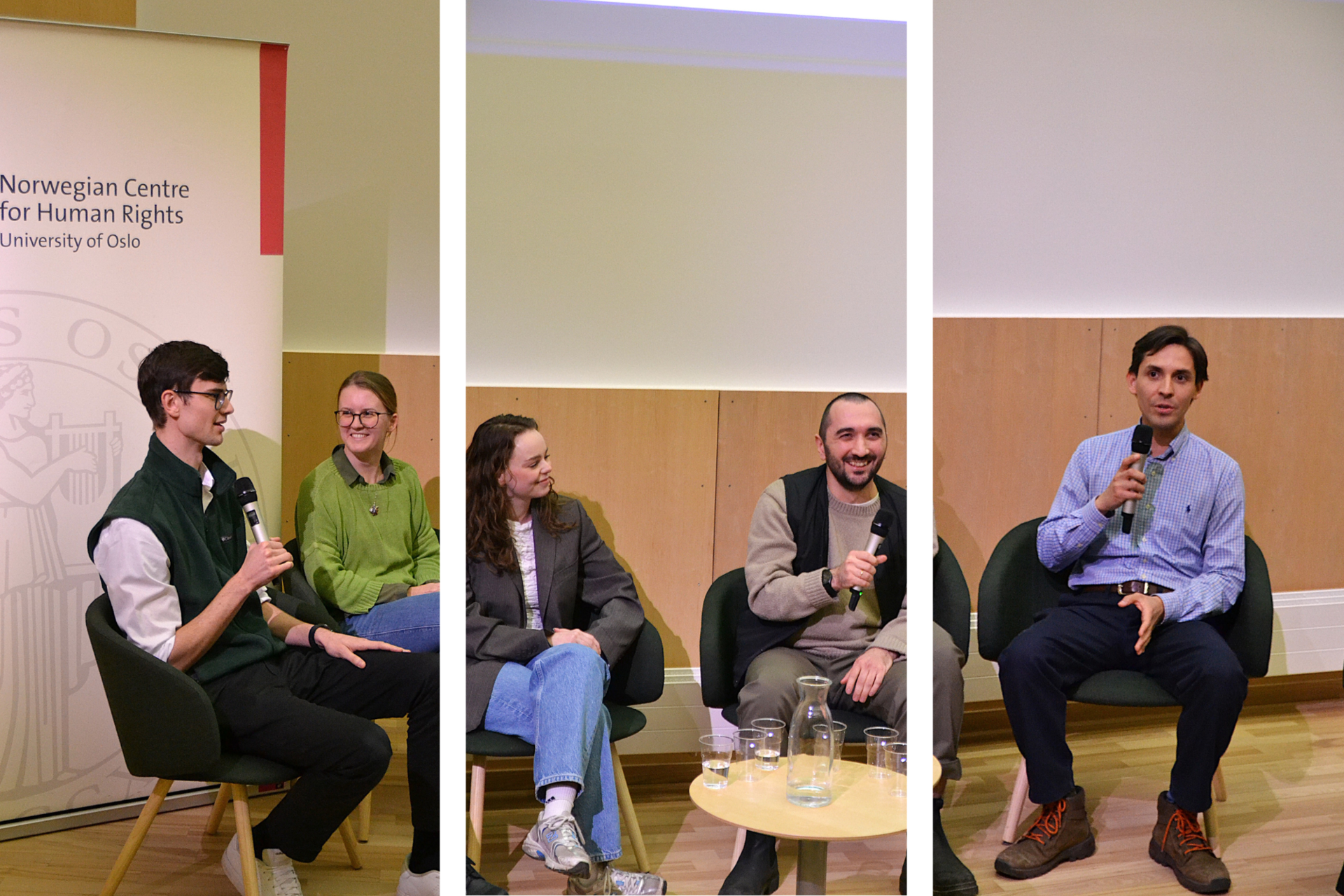
"One question stood out: How do you network authentically without feeling like you’re taking advantage of someone? I’m not sure this would have been asked out loud in a room full of people," Sandvik reflected.

The event concluded with a networking session, allowing current and former students to connect and expand their professional circles. Sandvik underscored the significance of these interactions, particularly in challenging times for the human rights field:
– I hope both alumni and students found the event meaningful and motivating at a time when human rights are under pressure.
