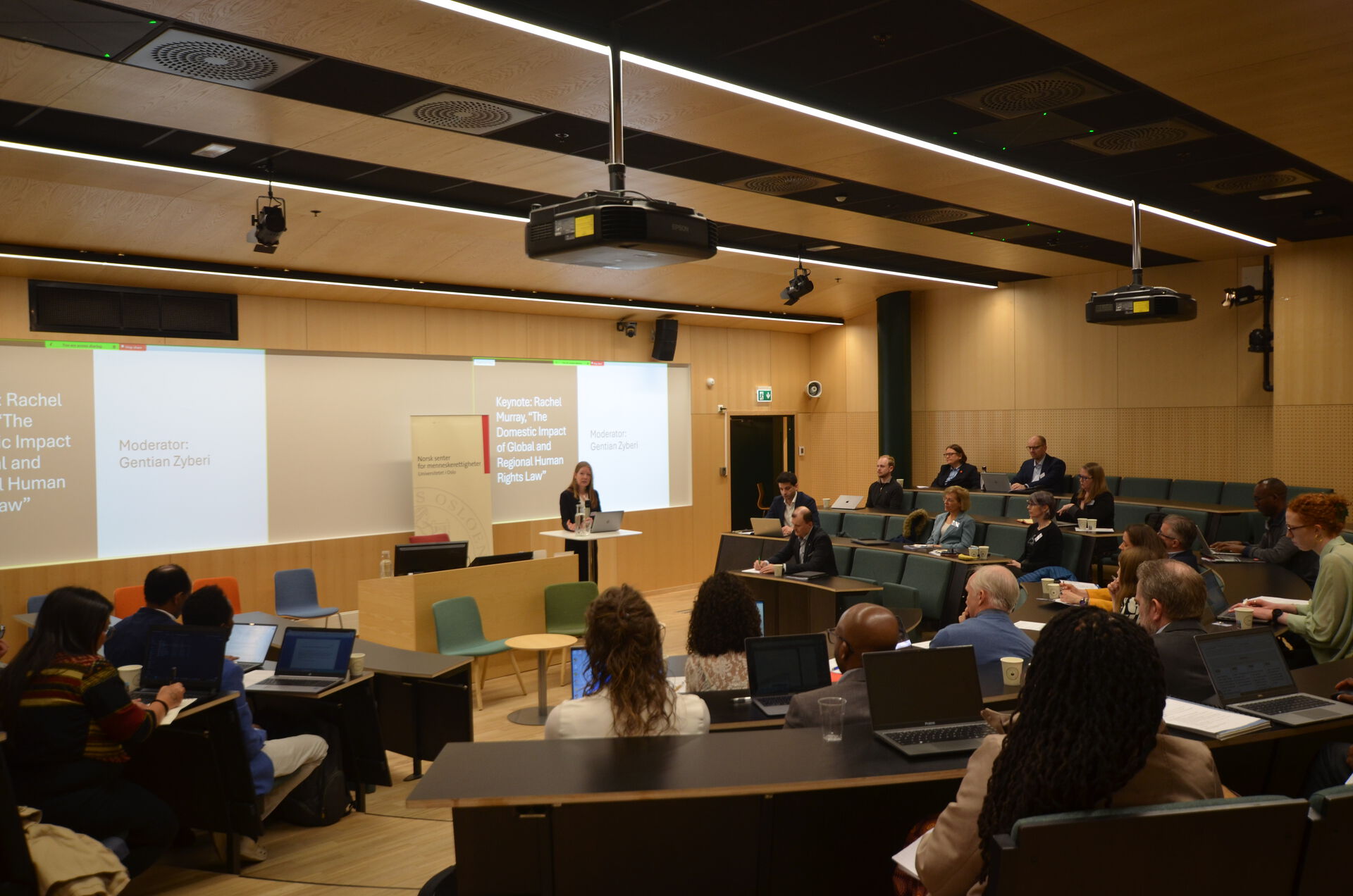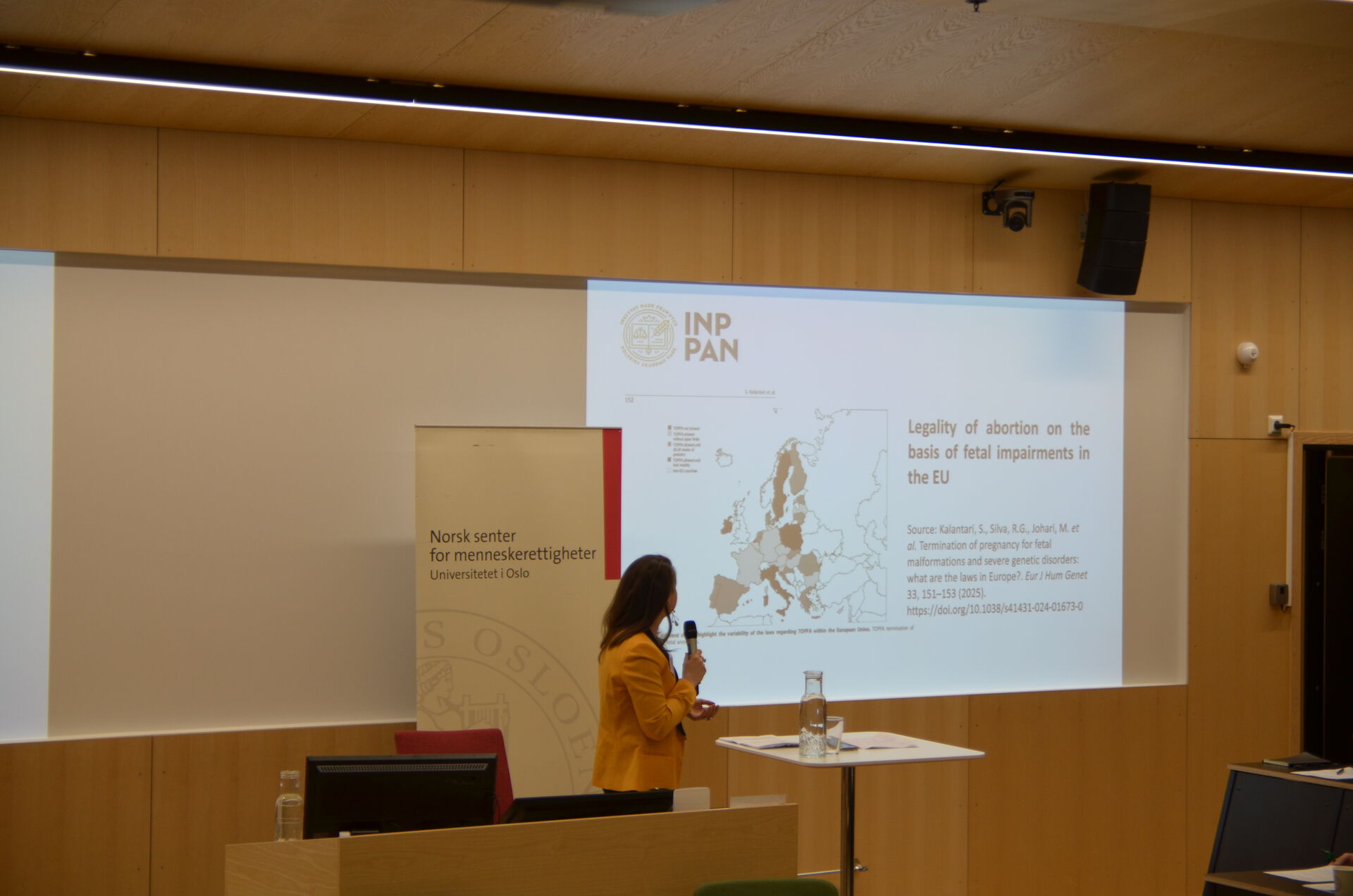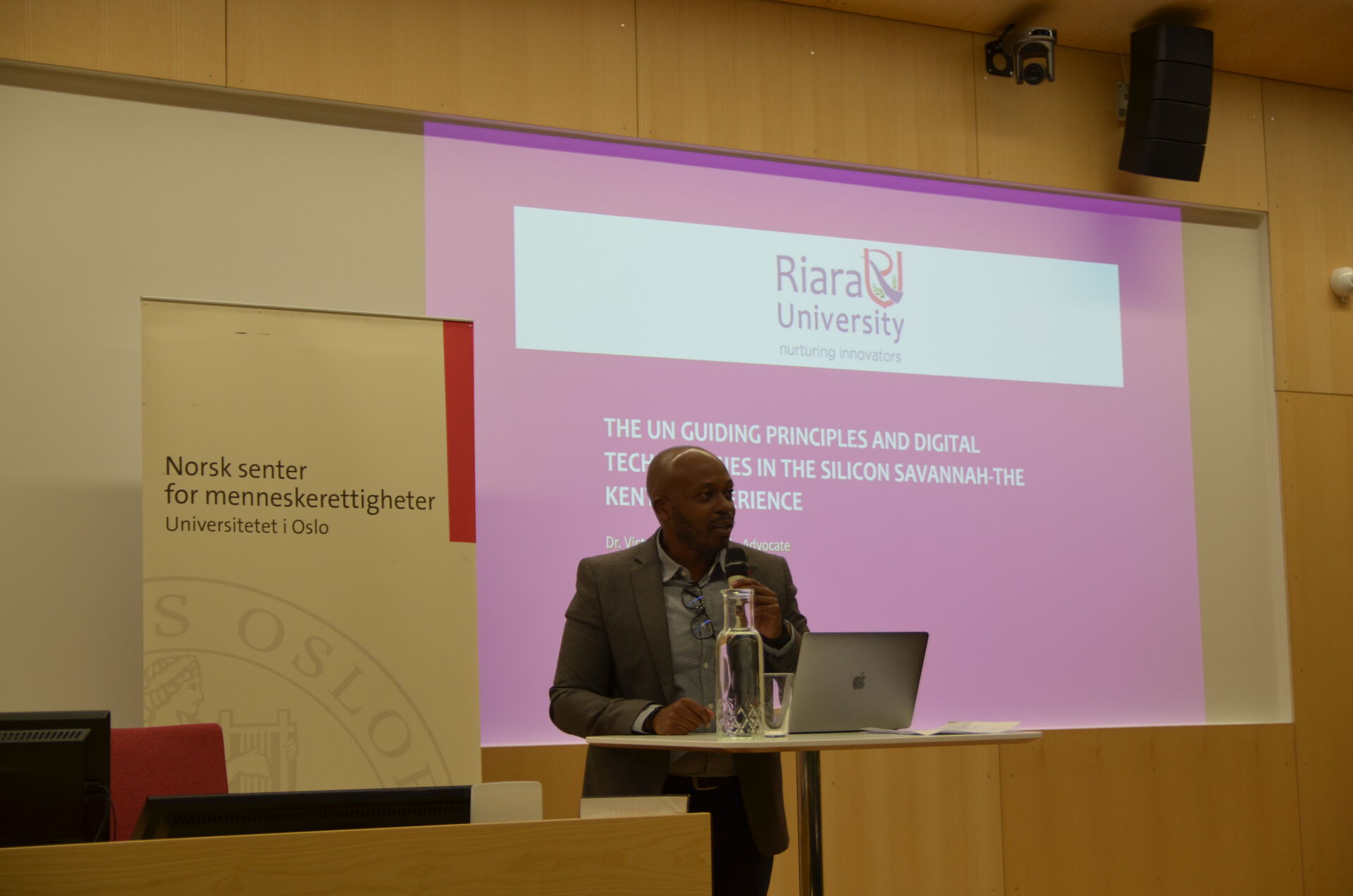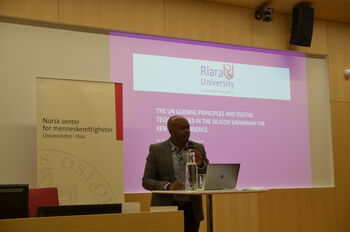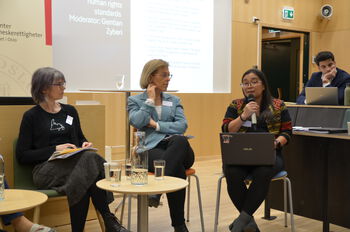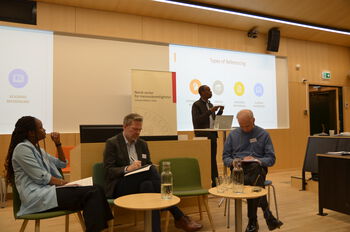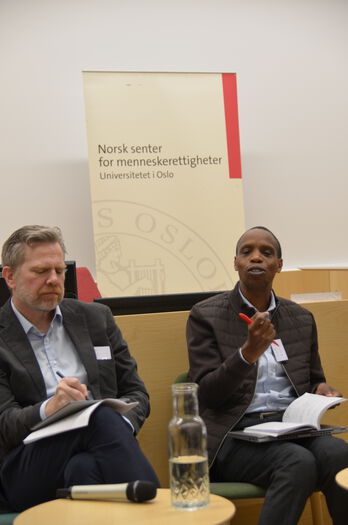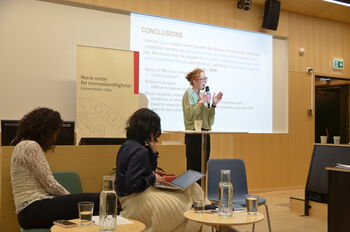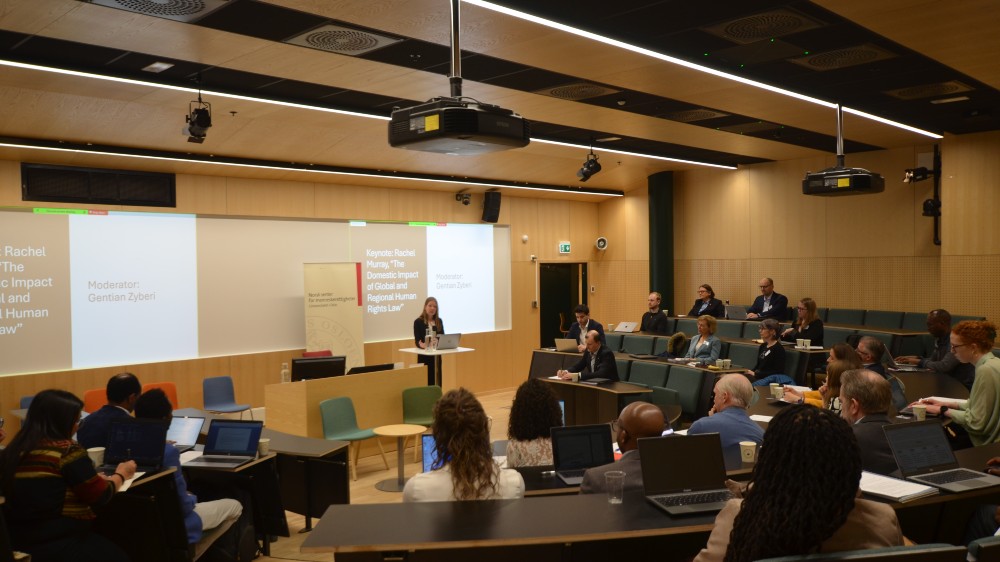
Held at Domus Juridica in Oslo, the two-day event marked the culmination of the UTFORSK project “Fostering research-based education through academic mobility and measuring the domestic impact of core human rights treaties,” co-organized with the Centre for Human Rights at the University of Pretoria.
Keynote Reflections and Foundational Questions
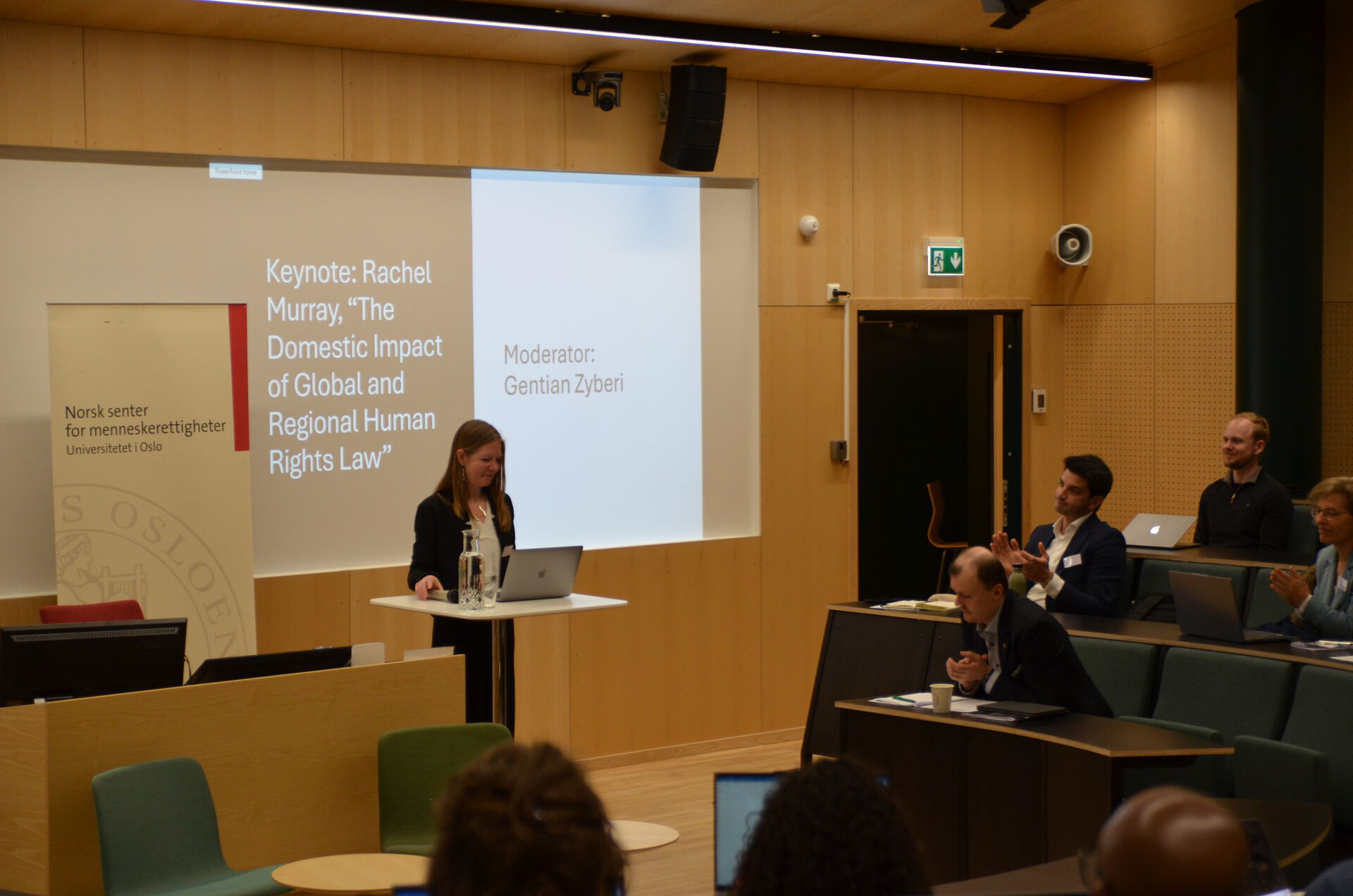
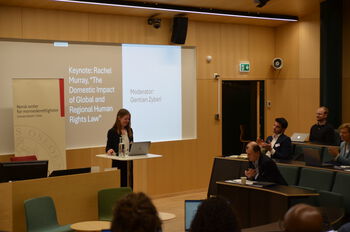
Opening remarks were delivered by Ragnhild Hennum, Dean of the Faculty of Law at the University of Oslo, followed by an introduction from NCHR Director Gentian Zyberi. The opening keynote was delivered by Professor Rachel Murray (University of Bristol), a leading scholar on the African human rights system. Her address laid the conceptual groundwork for the conference by emphasizing that domestic impact cannot be measured solely through legal transposition, but must also account for shifts in practice, institutions and public discourse. Murray noted:
"Human rights treaties are not ends in themselves, but tools for normative change. Their domestic traction depends on political will, institutional capacity and sustained advocacy"
From Global Norms to Local Realities
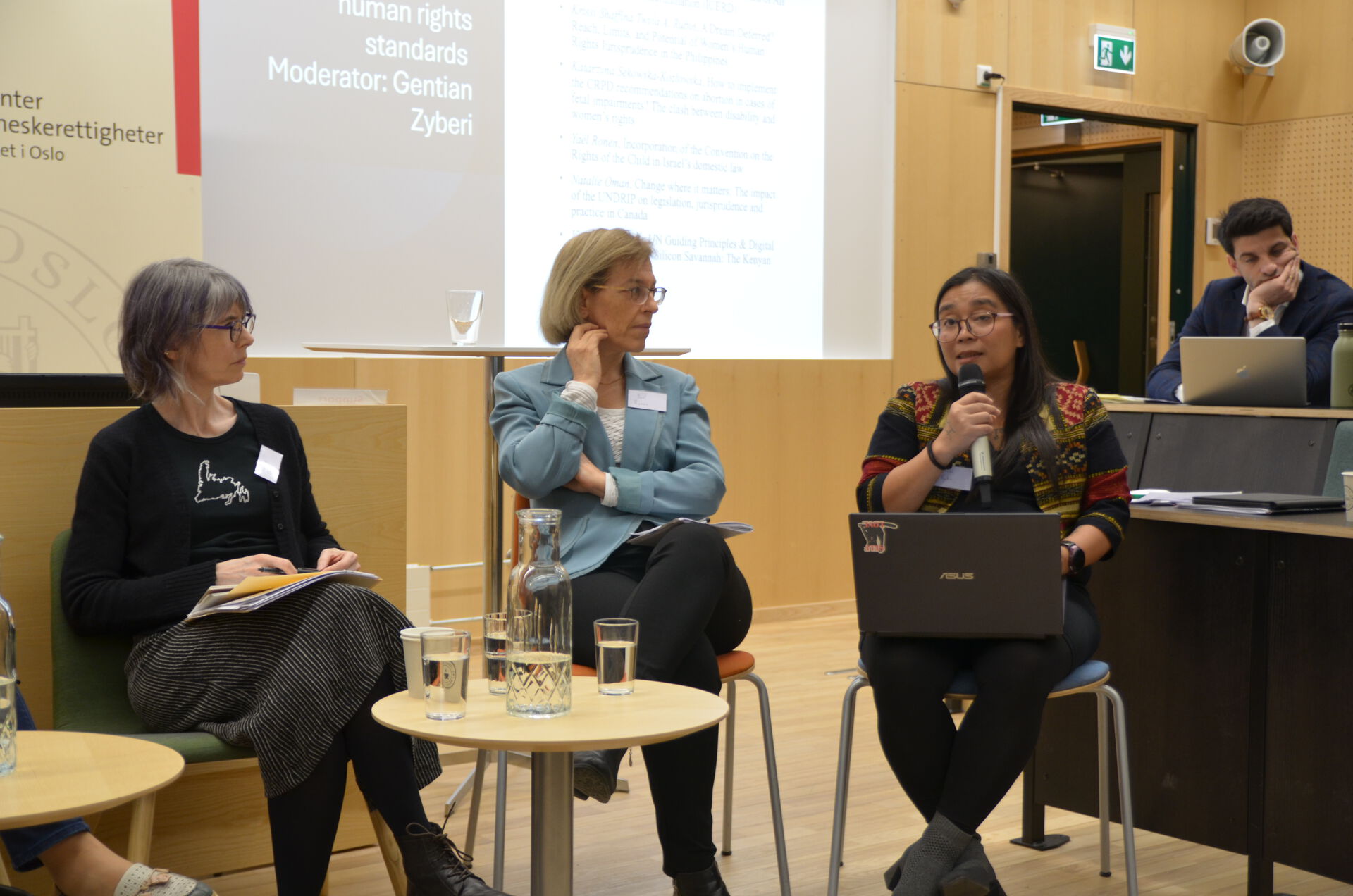
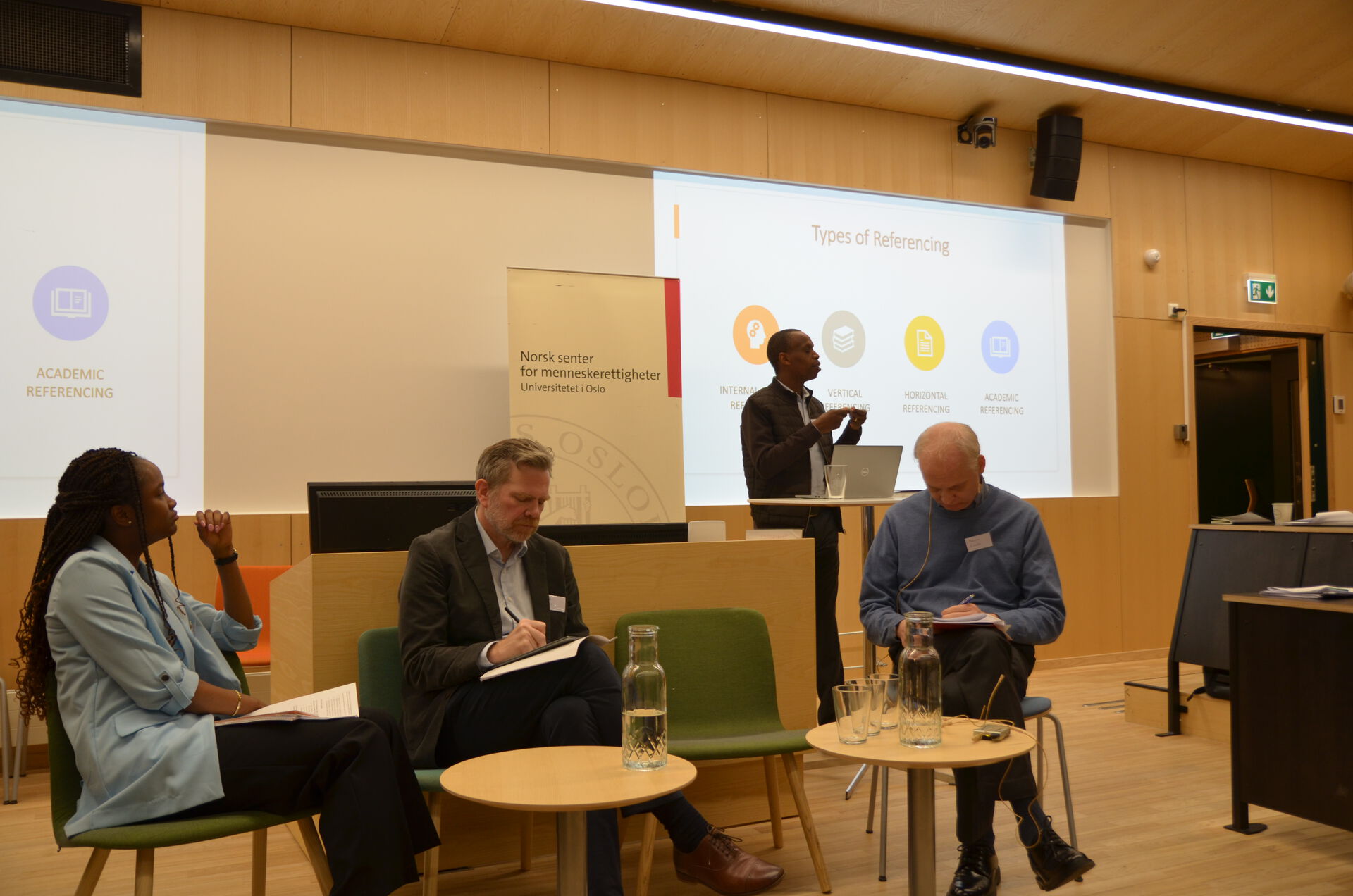
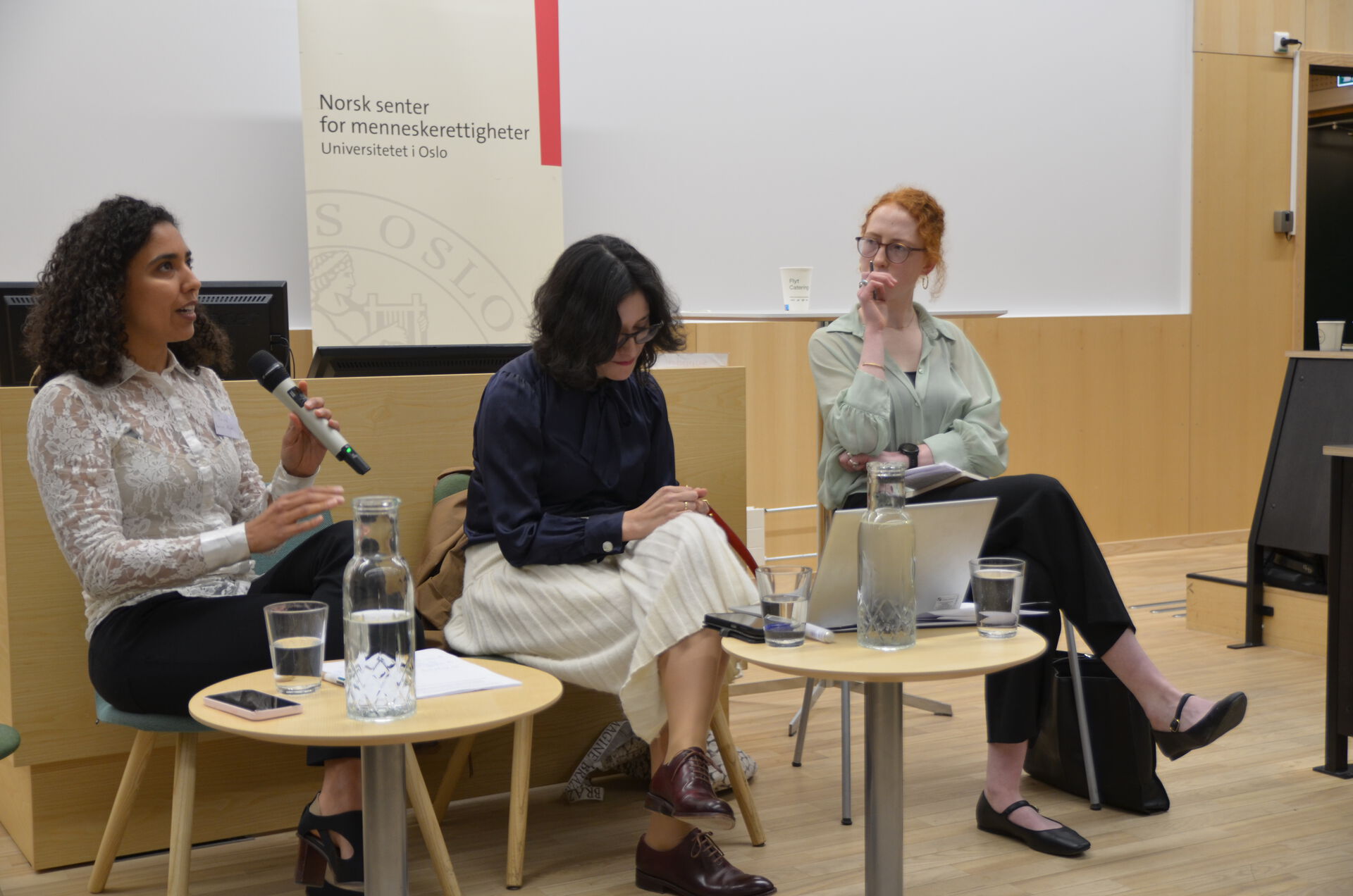
Over seven thematic panels, participants analyzed how human rights law interacts with domestic legal systems across different regions and sectors. Scholars presented comparative insights into how UN treaties such as the ICERD and the CRPD are implemented - or resisted - on the ground.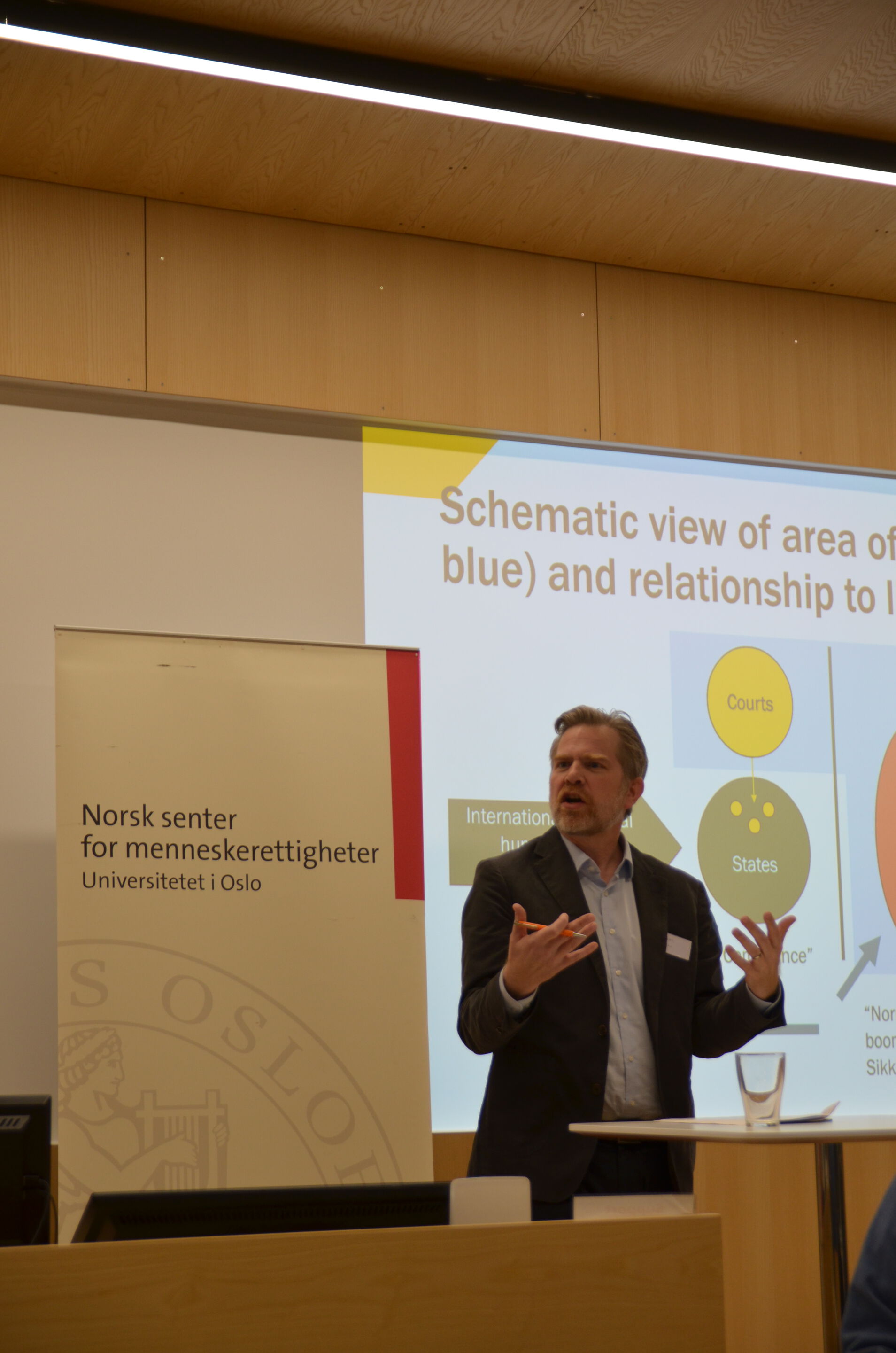
The domestic ripple effects of regional human rights system was also exploreds. Lesline Kouity (Université Félix Houphouët-Boigny) highlighted the normative traction of African human rights norms in national courts, while Niklas Hultin (George Mason University) analyzed the symbolic and legal influence of the African Commission during the Jammeh-era in The Gambia.
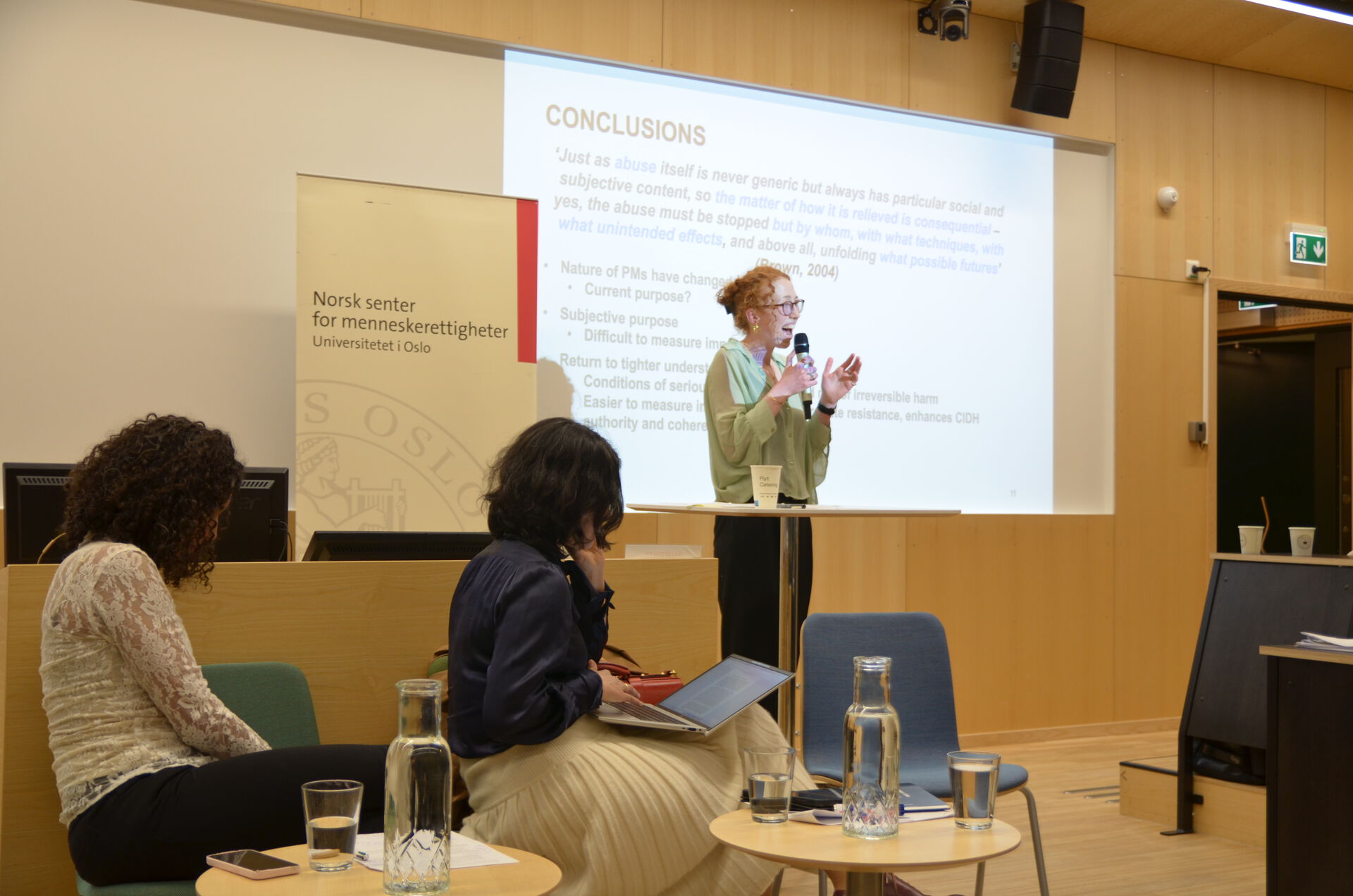
In the Inter-American context, Kate Murphy (University of Oregon) addressed the paradoxical impact of precautionary measures issued by the Inter-American Commission, even when state compliance is lacking. Tainá Garcia Maia (University of São Paulo) demonstrated how the Inter-American Court’s jurisprudence has influenced equality rights in Brazil and Colombia.
On Europe, Kasey McCall-Smith (University of Edinburgh) explored how treaty mechanisms helped catalyze reforms on children’s rights in the UK, while Cathérine Van de Graaf (Université Catholique de Louvain) dissected a rare ECtHR victory involving religious discrimination against a Muslim woman in Belgium.
New Frontiers: Climate Justice, Transitional Justice, and Domestic Courts
Day two opened with a keynote by Tomas Midttun Tobiassen, legal adviser at the Norwegian Ministry of Justice, who traced the layered incorporation of international human rights norms into Norwegian law.
Later sessions addressed newer challenges, including the climate crisis and transitional justice. Andre Nollkaemper (University of Amsterdam), speaking online, assessed how international human rights bodies shape national climate policies, urging scholars to track indirect forms of influence. The transitional justice panel brought diverse case studies from Spain, Colombia, Kenya, and beyond, revealing both the opportunities and limits of treaty-based interventions in post-conflict settings.
The conference closed with a panel on the evolving relationship between human rights norms and domestic courts. Here, participants discussed the varied influence of treaty bodies and regional courts across national legal systems.
Looking Ahead: From Research to Reform
The conference did not claim to offer conclusive answers, but rather aimed to map the complex terrain of human rights implementation. The concluding remarks emphasised that the domestic impact of human rights treaties is not binary, but dynamic - neither wholly effective nor entirely ineffective, but constantly evolving.
A volume based on selected contributions from the conference is expected to be published in 2026. Zyberi hope that the findings will inform both scholarship and practice, fostering better mechanisms for ensuring that international human rights law translates into meaningful protections for individuals.
The conference reaffirmed a fundamental truth: Human rights begin at home. Understanding how global norms take root domestically is not only an academic exercise - it is a necessary step toward building stronger, more just societies.