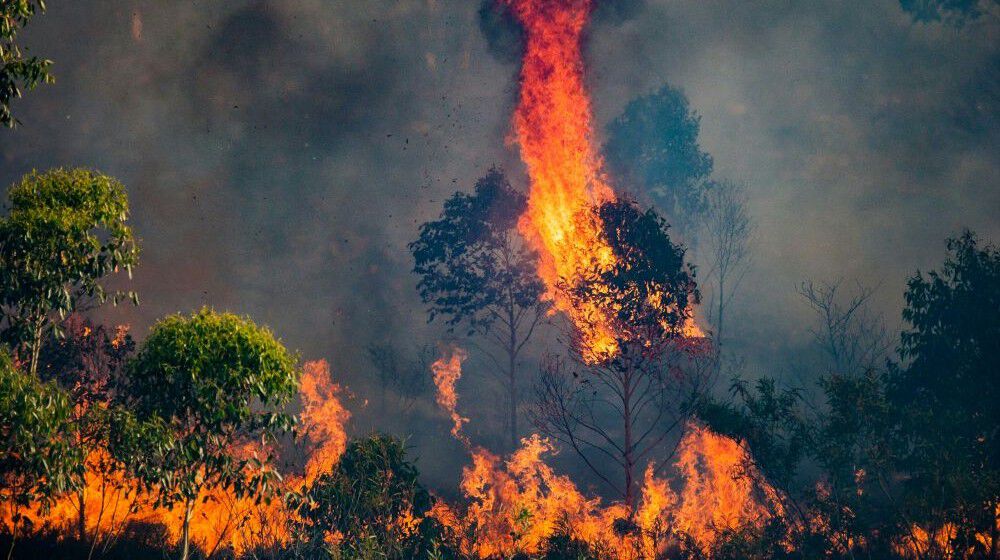
Whenever natural disasters take center stage, such as with the recent floods in several regions of Albania or the massive fires in summertime, attention always turns to finding those responsible and to the measures that could have been taken.
What is happening in Albania since the beginning of 2026 is no longer describable as an isolated extreme weather event. Last year, similar phenomena affected the Balkan country, destroying all the field crops for farmers. Traditional methods do not hold water anymore: when it rains, it rains endlessly, causing floods, and when the heat begins, it lasts for weeks without a single drop of rain.
As confirmed by the Intergovernmental Panel on Climate Change (IPCC), human activities, such as the burning of fossil fuels, deforestation and intensive agriculture, led to an increase of greenhouse gases (GHGs) emissions. Moreover, pollution and a lack of effective recycling policies are disproportionately affecting the entire land and its population.
In these circumstances, it is inevitable to wonder: Is Albania complying with its international climate change obligations, and do its adaptation commitments adequately reflect the climate risks it faces?
International Climate Obligations
Answering these questions requires a clear distinction between compliance under international climate law and the effectiveness of national climate action. The Paris Agreement relies on nationally determined commitments, transparency, and progressive ambition (Art. 4.3). Compliance is assessed primarily on whether a State has acted with due diligence and has done the utmost in addressing climate change.
Albania has been a Party to the United Nations Framework Convention on Climate Change (UNFCCC) since the mid-1990s and ratified the Paris Agreement in 2016. As such, in accordance with Article 4 of the Paris Agreement, it is obligated to submit a Nationally Determined Contribution (NDC), periodically update it, report on emissions and climate actions, and participate in international transparency mechanisms. Albania has fulfilled these procedural obligations by submitting its initial NDC in 2015 and revising it in 2021.
Albania is expected to submit a revised NDC in 2026 which, as the International Court of Justice (ICJ) highlighted in 2025, must represent a progression compared to its previous NDC and reflect the highest possible ambition—not as a discretionary choice, but as a legal obligation.
Political Intervention
In 2020, the government intervened with the law ‘On Climate Change’, which will enter into force at the end of January 2026 and foresees an renovation of the national framework, including its review and adaptation measures. The recent changes in the legal framework for climate change aim precisely at this renovation, placing emphasis on adaptation to climate risks and increasing the resilience of the territory and communities. The role of scientific research in the field of climate will be strengthened to build evidence-based policies and the collection, processing and storage of climate data is seen as a key element for risk assessment and planning preventive measures, especially in areas most exposed to floods, droughts and fires.
A National Adaptation Plan was also introduced for the period 2021-2024, followed by a National Energy and Climate Plan.
As for many other countries, Albania’s focus has now shifted to adaptation, rather than mitigation, considering also the scientific international community’s confirmation that the 1.5° Paris Agreement’s goal has now become impossible.
A vulnerable country
As confirmed by a 2024 World Bank report, Albania is among the most at-risk European nations to climate disasters. Against this backdrop, the ‘National Plan for Adaptation to Climate Change 2026-2036’ drafted by the Albanian Ministry of Environment, underscores that the vulnerability of the Albanian population to natural disasters is exacerbated by poverty, low-quality infrastructure, uncontrolled construction and a series of human-induced environmental factors, from rapid deforestation and poor watershed management to increasing land degradation.
In this framework of uncertainty and vulnerability, climate change threatens communities and infrastructure, so urgent measures are needed in several areas, including agriculture, tourism, transport, energy, and urban development, otherwise Albania could lose 7% of its National Product due to lack of timely response.
According to the report, to prevent losses of this magnitude, investments of $9.8 billion are needed in measures to cover reforestation, urban greening, energy and water infrastructure, coastal protection, and systems for disaster preparedness and information management.
Investments are necessary because, according to conservative estimates, in the absence of proactive measures, climate-related economic damages could reach 7% of Albania's GDP.
European Union Enlargement at risk?
Albania, as an EU candidate country, is required to meet strict accession criteria, with environmental and climate issues holding particular importance given the EU’s leadership in the green transition and the importance given to the Western Balkans Green Agenda.
The European Commission’s ‘2025 Albania Report’ shed light on the narrowness of its climate legislation, by underlining that ‘Alignment with the EU acquis on climate remains limited and no particular development was reported on addressing climate change’.
The EU Commission also highlights that ‘The country’s ability to integrate climate change into sectoral strategies and plans is still weak’ and that ‘deficiencies in the financial and administrative capacities for climate change were not addressed and hamper progress in the sector’, putting at risk the success of the enlargement application.
Ultimately, the report states that ‘Albania should, without delay, submit its first biennial transparency report and a new and ambitious Nationally Determined Contribution under the Paris Agreement, in line with efforts 86 to limit global warming to 1.5°C’.
To conclude, Albania will probably not meet the target set out in the current NDC which aims for an overall reduction of 20.9% of GHG emissions by 2030. Using the words of the ICJ, the adoption of a policy, and the taking of related measures as a mere formality is not sufficient to discharge the country from its climate obligations.