The project «Radicalization and Resistance» consisted of five subprojects:
Resistance to extremism
This project explored attitudes and resistance to extremism among young Muslims. We examined how resistance was expressed through interpretations of Islamic concepts and narrative strategies such as ignoring it, ridiculing it and using emotional expressions about it. Ninety young Muslims were interviewed, and they described the struggle between moderate and more extreme factions of Islam. The studies demonstrate how violent jihad is negotiated and resisted on a daily basis within Muslim communities.
Read more
We investigated how young Muslims practice their faith, and where they get their religious knowledge from, and explored their views on various Islamic ideas and concepts. Most importantly, we showed how young Muslims reject violent extremism because of how they interpret Islam.
In recent years, violent extremism has received ever more attention in public debate and research. The result has often been a somewhat distorted image of Islam and Muslims. In this project, instead of asking why some people are drawn to extremism, we asked why most young Muslims are not, so as to acknowledge and explore their resistance to religious extremism.
Methods
We conducted 90 qualitative interviews with young Muslims in Norway. The participants were men and women between 18 and 30. They had a variety of Islamic, ethnic and social backgrounds, and very diverse religious beliefs and opinions.
Results
The interviews revealed that young Muslims use a wide repertoire of narratives to fend off religious extremism. Some of these were inspired by Islamic concepts and stories, while others relied on more universal arguments to reject jihadism. The project also studied the role of the Internet, sectarianism, and reasons for radicalization. The results indicate the importance of "everyday religion" in understanding the role of Islam in contemporary society.
Media coverage
- Faith is a private matter for young Norwegian Muslims (www.sciencenordic.com)
Publications
- ‘ISIS is not Islam’: Epistemic injustice, everyday religion, and young Muslims’ narrative resistance
- Opposing violent extremism through counternarratives: Four forms of narrative resistance
- A farewell to the lone hero researcher: Team research and writing
- Sunni–Shia identities among young Norwegian Muslims: The remaking of Islamic boundaries
Contact Sveinung Sandberg for papers that are unpublished or behind a paywall.
Discrimination and reactions
This project examined hostility and racism towards Muslims, and the ways in which young ethnic minorities resisted hate and discrimination. By conducting a further 40 interviews with young people of ethnic minority backgrounds, we investigated different forms of discrimination and new forms of social mobilization (Black Lives Matter). We showed how young Muslims downplay hostility and racism, enter into dialogue, talk back, use humor, as well as mobilizing for social protest.
Read more
Research shows the existence in Norway and throughout Europe of widespread negative attitudes to Islam and Muslims. Hate and hostility to Islam impact the daily lives of the 200,000 Muslims living in Norway. Derogatory comments, hostile stares and concrete discrimination all reflect prejudice against Islam. There is very little research on how Muslims and other minorities respond to such unpleasant experiences. This project investigated the strategies young Muslims and other minorities employ in the face of hate and stereotyping.
Methods
We conducted 90 qualitative interviews with young Muslims in Norway about their experience of discrimination and anti-Muslim hostility, and how they reacted to it. The anti-Muslim hostility we describe is what interviewees experienced as direct personal hostility directed at them because they were Muslims.
We interviewed a further 40 young people with an ethnic minority background to widen our initial focus on religion, radicalization and resistance to extremism so as to include racism, mobilization against racism and discrimination against Muslims and ethnic minorities.
Results
We examined experiences of racism and anti-Muslim hostility among ethnic minorities. Our studies particularly examined how young people from minorities responded to, negotiated, and resisted hate, hostility and prejudice. Many Muslims described how they got involved in discussions to "defend" Islam, while others tried to silence, ignore or patronize those who expressed anti-Muslim attitudes. Many also described trying to confront hostility with openness and understanding. There were similar responses to racism, but social protest was also important. Our studies in this project explored the relationship between anti-Muslim hostility, racism, and new types of social mobilization (Black Lives Matter).
Media coverage
Publications
- A repertoire of everyday resistance: Young Muslims’ responses to anti-Muslim hostility
- Black Lives Matter: The role of emotions in political engagement
- Resisting racism in everyday life: From ignoring it to confrontation and protest
- The cultural consequences of Black Lives Matter
Contact Sveinung Sandberg for papers that are unpublished or behind a paywall.
Street culture and jihadism
This project examined the relationship between jihadism and street culture. Various data sets were used, the most important being one year of ethnographic fieldwork among young street criminals in Oslo. Unlike the dominant literature in this field, the project findings revealed the existence of widespread resistance to jihadism among young marginalized ethnic minorities. The resistance was based on a perception of jihadist terrorists as weak and cowardly, qualities that were very much despised in the street culture. We also describe why some people in this environment are drawn towards extremism.
Read more
Many religious extremists have a background in street culture, drug use, violence and crime. Some are drawn to extremism because they are fascinated by its cultural and oppositional style. Others seek excitement, friendship, or absolution from previous sins or their employment of "legitimate" violence. In this project we examined both why people with a background in violent street culture and drug use were attracted to religious extremism and why they rejected it.
Methods
The project was based on one year of ethnographic fieldwork in the city center of Oslo, and interviews with 54 criminals or ex-criminals with a Muslim background. Researchers spent lengthy periods in areas and milieus characterized by crime and street culture, where the sale and use of illegal drugs was widespread.
Results
The fieldwork and interviews showed that Muslims involved in crime mainly oppose religious extremism. Terrorists are frequently perceived as evil, bad Muslims, and “cowards” that do not have the right kind of masculinity. We also explored why some people in street culture are drawn towards extremism. Understanding why young, marginalized men are attracted to, or reject jihadism, may help prevent political and religious extremism.
Publications and media
- How Gangsters Become Jihadists (And Why Most Don’t): Bourdieu, Criminology, and the Crime-Terror Nexus (podcast)
- Street culture meets extremism: How Muslims involved in street life and crime oppose jihadism
- How 'gangsters' become jihadists: Bourdieu, criminology and the crime-terrorism nexus
- Muslim narratives of desistance among Norwegian street criminals: Stories of reconciliation, purification and exclusion
- Narrative ethnography under pressure: Researching storytelling on the street
- Confluences of street culture and jihadism: The spatial, bodily and narrative dimensions of radicalization
- The street-jihadi spectrum: Marginality, radicalization and resistance to extremism
- Street-level counter-terrorism: An ethnographic study of the nexus between crime and violent jihadism
- What good can stories do?
Contact Sveinung Sandberg for papers that are unpublished or behind a paywall.
Online radicalization
This project investigated how jihadist organizations use the Internet and social media. One issue explored was the close symbolic connection between street culture and Western extremist culture. Its findings indicate that a new hybrid street-jihadi culture has emerged, which has a strong appeal for young men who are marginalized and sensation-seeking and glorify violence in any form.
Read more
The Internet, social media and popular culture are important for religious extremist groups. They are utilized to collect funds, as well as for training, planning, and cyber warfare. Websites and social media are also important arenas where contact can be established with young people vulnerable to radicalization.
In this project, we examined closely the rhetoric used in online jihadist magazines and "jihadi rap", and their appeal for potential supporters.
Methods
The project was based on a qualitative study of material published online by al-Qaida, the Islamic State and similar groups. Analysis of online magazines, websites and propaganda videos shows the distinctive visual features and basic stories characterizing their rhetoric.
Results
Our studies demonstrated that violent jihadist organizations promote notions of a Muslim utopia and legitimate violence by emphasizing the suffering of Muslims. This rhetoric has a broad appeal within Muslim communities. In parallel, a narrower kind of rhetoric and symbolism appears in sensational "spectacles of violence". This type of subcultural provocation appeals to a much smaller group of sensation-seeking men who glorify violence. We also investigated cultural expression of "jihadi cool", the relationship between jihadist and extreme right-wing online propaganda, and the coverage of terrorism in mainstream media.
Publications
- Islamic State propaganda: Between social movement framing and subcultural provocation
- A cultural criminology of ‘New’ jihad: Insights from propaganda magazines
- Rap, Islam and Jihadi Cool: The attractions of the Western jihadi subculture
Student dissertations
- "Be prepared for bad news": Framing terrorism in Norwegian news media
- The chosen few: A comparative study of The Prophet’s Ummah and The Nordic Resistance Movement’s language and visual communication
- Stories, style & radicalization: A cultural and narrative criminological study of jihadi propaganda magazines
- The visualized story of martyrdom: Exploring jihadist mythology through suicide farewell videos
Contact Sveinung Sandberg for papers that are unpublished or behind a paywall.
Prevention of extremism
This project explored the experiences of Muslims seeking to prevent extremism. State efforts to tackle jihadist milieus were also studied. The findings indicate how the new policy field of preventing radicalization and violent extremism largely emerged as a response to increased activity in Norwegian jihadist milieus.
Read more
After 2010, the prevention of radicalization and violent extremism emerged in Norway as a new field of policy and policing. Global jihadism played a key role in it, and the Muslim population and religious communities have contributed to numerous initiatives. The type of prevention of extremism that is most common and effective, however, is informal and takes place in private settings, among friends and family.
Methods
We conducted 90 qualitative interviews with young Muslims in Norway. Parts of these interviews related to their knowledge and experience of measures to prevent radicalization and violent extremism. A small number of interviewees were also approached because of their former involvement with extremist milieus. We also drew on interviews with people involved in radicalization prevention and observed trials of people accused of political and religious extremism.
Results
We show how and why jihadist individuals and groups in Norway have been impacted by and been the primary target of efforts to counter violent extremism. We have examined practitioners’ experiences, the measures they employ, and the implications of such counter-radicalization work. The project highlights the important role that young Muslims and their families play in “everyday” efforts to combat political and religious radicalization.
Publications
- Everyday prevention of radicalization: The impacts of family, peer and police intervention
- Prevention of radicalization as an emergent field of plural policing in Norway: The accelerating role of militant Islamists
- Countering extremism(s): Differences in local prevention of left-wing, right-wing and Islamist extremism
- Why not talk about repression? Radical activism and its responses to repression
- The causes, contents and consequences of repression: A framework for analyzing protest control in the counter-extremism era
- Resisting violent extremism through pro-social resilience: The case of Norway
- Key dilemmas in the prevention of radicalization and violent extremism
Contact Sveinung Sandberg for papers that are unpublished or behind a paywall.
The research project "Radicalization and Resistance" resulted in 40 scientific publications. Nineteen scholars from six different countries have published using data from the project. Eight master’s students were also involved.
MuslimVoices
How is it to be young, Norwegian and Muslim?
Book: Unge muslimske stemmer. Om tro og ekstremisme
Based on qualitative interviews with 90 Muslims, the book Unge muslimske stemmer (in Norwegian) provides insight on the relationship between Islamic faith and extremism from the perspective of young Muslims in Norway.

The book can be read for free on the Scandinavian University Press's website.
Visual project: MuslimVoices
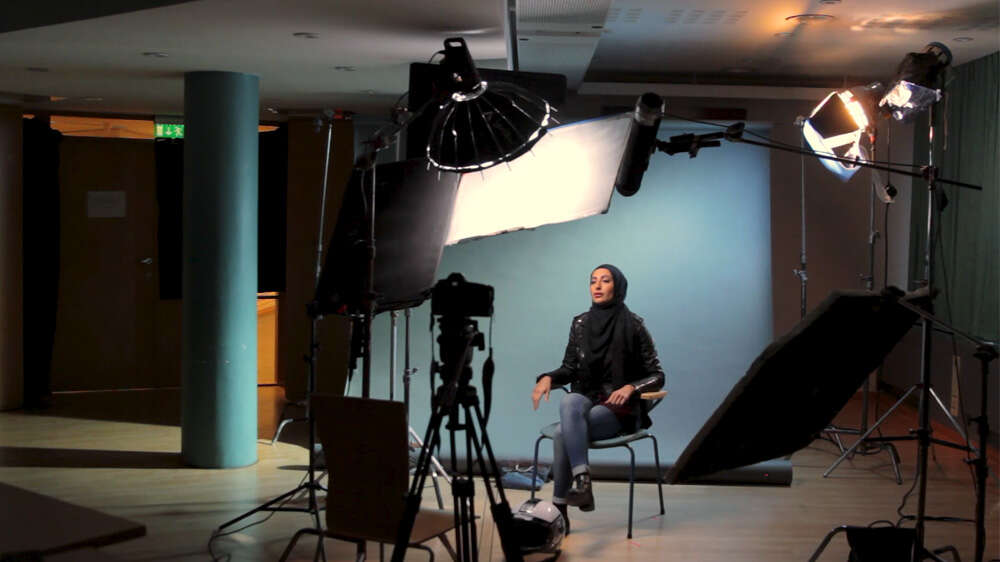
"MuslimVoices" is based on interviews with young Muslims between 18 and 30 years old. In short videos, they talk about their thoughts on faith, identity, discrimination, religious extremism, as well as explain well-known Islamic concepts such as jihad and sharia.
The film project was part of the project "Radicalization and Resistance" and was funded by the SAMKUL program at The Research Council of Norway, project number 283240.
You can also find us on:
Do you want to know more?
Are you interested on hearing more about the project "Muslim Voices"?
Contact Sveinung Sandberg for more information about the project.