Background - blasphemy in the Indonesian legal system
Cases of alleged blasphemy have been subject to considerable controversy in Indonesia. The law commonly referred to as ‘the blasphemy law’ has been challenged before the Constitutional Court on five different occasions, with claimants holding that the law violates their constitutional human rights.
The Constitutional Court has previously cancelled legislation it found to be in violation of the constitution’s human rights guarantees, on many occasions. In the case of the blasphemy law, however, the Court has not found the law to be in violation of the constitution. Particular cases where the blasphemy law had been applied in such a manner that rights had been violated was seen as a matter of wrongful application of the law, and thus outside the jurisdiction of the Constitutional Court.
The Court had in effect made the case for improving the way the blasphemy law was applied. On this background, LeIP (the Indonesian Institute for Independent Judiciary) had in 2019 developed a training module on blasphemy cases, used for trainings for the courts. This module was considered relevant to build on, due to the following:
First, the module itself was considered to be of good quality, and most of the material was still relevant also under Indonesia's new Penal code. Second, the Supreme Court had itself previously used the module, independently of project cooperation with external partners. Third, blasphemy cases continue to challenge the courts, with many rights potentially at stake. Fourth, most of those previously trained in the handling of blasphemy cases had left the Supreme Courts training centre, thus there was a need to develop new trainers.
Successful training course
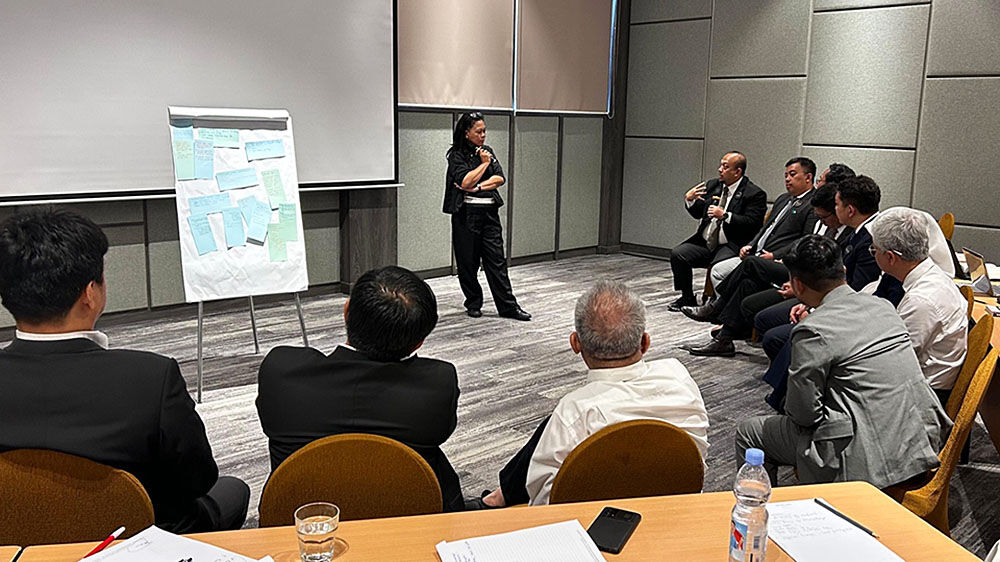
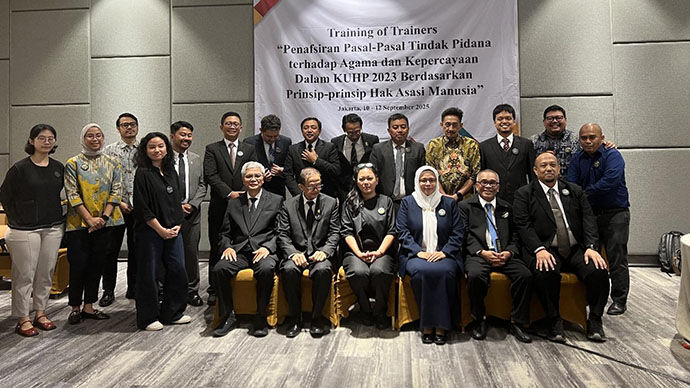
NCHR and the Research Development, Training & Education Body of the Supreme Court of the Republic of Indonesia, entered a MoU in 2022 on aiming to improve knowledge of human rights and their application by judicial actors. In line with this MoU, the blasphemy training material was updated to be in line with Indonesia’s revised criminal code. The training in September 2025 was attended by fifteen participants, including some who works as ‘full time trainers’ at the Supreme Court, and some judges who serves as trainers on particular occasions. It was very well received by the participants. The Stanford Centre for Human Rights in International Justice was involved in developing the training materials.