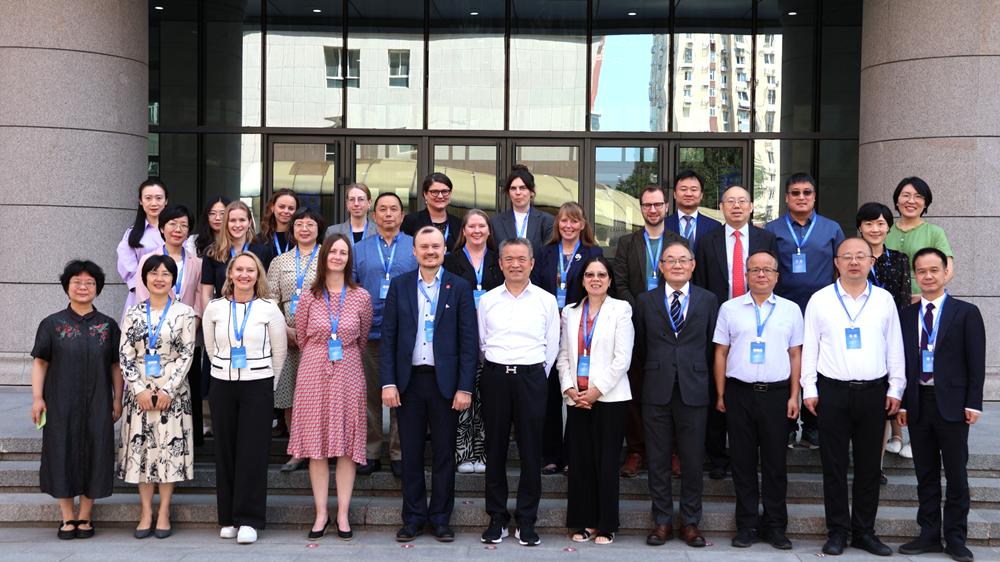
With an aim to facilitate conversations around human rights education in China and Europe, the NCHR and CUPL organised an international forum in May focusing on human rights education in technology, business, gender equality and human rights mechanisms. The NCHR invited eight European scholars to China to meet and discuss with Chinese scholars on the subjects of curriculum design and methodologies in teaching.
The forum aimed at facilitating a platform for dialogue and new partnerships amongst scholars, and to enhance opportunities for teachers to learn from each other.
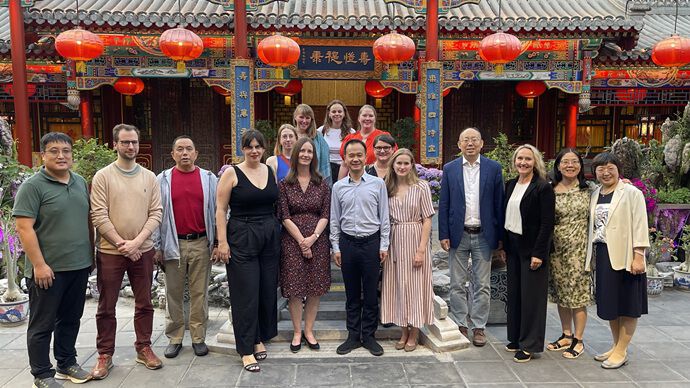
The Euro-Sino Human Rights Education Forum
For almost 30 years, the NCHR has worked with CUPL and other Chinese universities in developing human rights education in China. The Euro-Sino HRE forum is based on a longstanding partnership between the NCHR and the Human Rights Institute at CUPL with an aim to facilitate conversations between European and Chinese scholars.
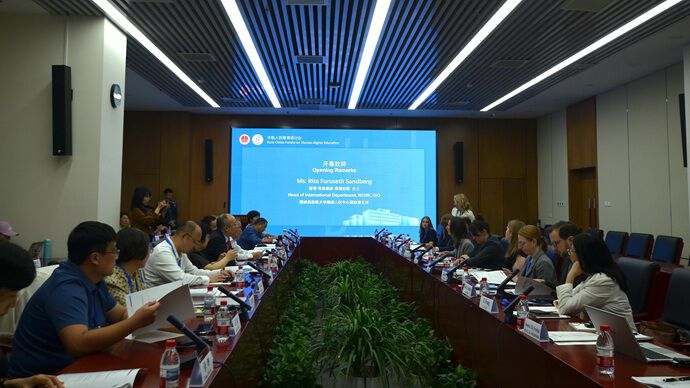
The forum lasted for two days and included an opening ceremony with welcoming words by the deputy director of the Human Rights Research Institute at CUPL, Associate Professor Bochao Yang, and the head of the international department at NCHR, Rita Sandberg. The opening ceremony was followed by two keynote speeches given by Prof. Zhang Wei (Dean, School of International Education, CUPL) and Prof. Gentian Zyberi (Director of the NCHR). Each keynote reflected a longstanding commitment to the partnership between CUPL and NCHR, the importance of the forum and its contribution to human rights education. Prof. Zhang highlighted how important international collaboration is for China and for fostering the future of academic expertise.
Throughout the forum, experts from China and Europe presented their experiences in teaching human rights. The first day provided a thematic overview of human rights education, and the rest of the forum consisted of workshops that deep-dived into the thematic areas of the forum.
"Human rights education is the bedrock of promoting human rights." Rita Furuseth Sandberg, Head of the International Department, NCHR
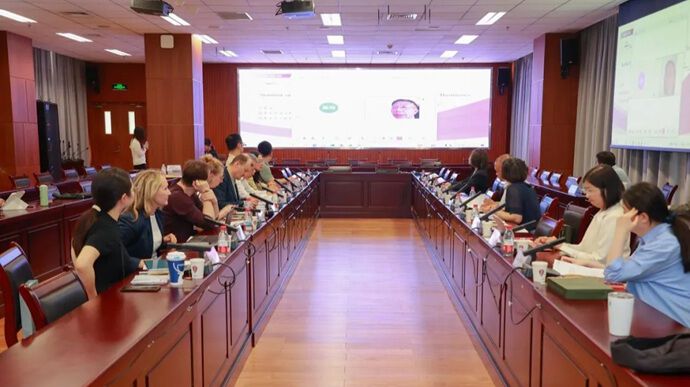
Throughout the workshops, different aspects of human rights education were presented. Each workshop was followed by discussions and questions from participants, leading to in-depth explorations of topics, such as human rights in the era of technological advancement, the rights of individuals with disabilities, gender equality, and the international multilateral collaboration on business and human rights.
Academic exchanges
Although the forum was the primary focus of the trip, each European expert participated in academic exchanges with various Chinese universities whilst in China. These exchanges included meetings with academic institutions, interactions with students, and participation in academic seminars. The NCHR and European experts engaged in discussions with Peking University, CUPL, Fudan University, Nankai University and China Foreign Affairs University.
The exchanges were organised with an aim to further and to form new partnerships. It also allowed for the European academics to meet students, as well as other Chinese academics, that were focusing on their key interests and research, thus forming relationships on highly relevant research.
Meeting and academic exchange at Chinese Academy of Social Sciences (CASS) Institute of Law
On May 26, the delegation from the NCHR visited the Chinese Academy of Social Sciences (CASS) Institute of Law in Beijing. They were warmly welcomed by Director Mo Jihong and other academics and senior leaders at the Institute. Notably, several Chinese representatives at the meeting had previously spent time as visiting scholars at the NCHR. This visit also coincided with Cecilie Figenschou Bakke from the NCHR, spending parts of May as a a visiting scholar at the Institute in Beijing.
During the meeting, both parties explored opportunities for enhanced collaboration and agreed to foster meaningful academic exchanges focused on law and human rights. Rita Sandberg, Head of the International Department at NCHR, extended an invitation for CASS scholars to visit the University of Oslo.
Following the formal discussions, NCHR Director Professor Gentian Zyberi participated in a seminar on "Recent Developments in International Human Rights Law and the International Court of Justice," a lecture which garnered significant interest from PhD candidates and young scholars at CASS.

Academic exchanges with China University of Political Science and Law
While visiting CUPL, the NCHR and the European experts also took part in academic exchanges with the Human Rights Centre and the School of International Education. On May 27, Professor Nina Reiners from NCHR lectured at the School of International Education. She presented on business and human rights within recent EU legislation to PhD students at the faculty. Professor Reiners focused on implications for foreign companies and corporate lawyers and discussed with students on a new case on climate change. She analysed the impact of the EU's mandatory Human Rights Due Diligence regulations for companies, regardless of their locations, and emphasized that ESG will become increasingly important for companies operating outside Europe in the future.
Prof. Inga Winkler from the University of Wageningen, together with colleagues from CUPL, presented on the right to water and sanitation during an academic exchange at the Centre for Human Rights at CUPL. Students and colleagues engaged in conversations around development, menstruation, gender equality and safe water throughout the exchange.
Academic exchange with China University of Foreign Affairs (CUFA)
On 29 May, two experts from Europe visited CUFA, at the Department of International Law. Prof. Kasey McCall-Smith from University of Edinburgh and Prof. Gentian Zyberi presented their research for several academic staff at the department. Prof. Smith presented on her research on the general principles of international law regarding reservations and specifically on Iceland's reservation to the Whaling Convention. She also analysed the role of the UN human rights treaty bodies as lawmakers. Following, Prof. Zyberi presented his research on the contribution of international courts in promoting peace as a community interest. He also focused on the main functions of international courts (ICs), including the role and contribution of ICs in promoting and furthering the interests of peace. Following the presentations, the exchange included a discussion and Q&A, allowing for the participants to delve deeper into the presentation topics.
International Seminar at Nankai University
On May 30, several of the European experts, together with a delegation from the NCHR, travelled to Tianjin for an international seminar focusing on climate change, technology and international law at Nankai University.
The NCHR and Nankai University HRC and Law School co-organized the ‘EU Corporate Sustainable Due Diligence Legal Risks Seminar’ at the Law School of Nankai University on 30 May. The seminar consisted of two units, namely ‘Human Rights, Corporate Responsibility and Due Diligence Legislation in Global Governance’ and ‘Climate Change, Artificial Intelligence and Supply Chain Due Diligence Legislation’. Around 20 experts and scholars from Nankai University, Chinese Academy of Social Sciences, Beijing Normal University, China Foreign Affairs University, Civil Aviation University of China, University of Oslo, Norway, University of Glasgow, UK, Leiden University and representatives from the practical community such as China National Textile and Apparel Council and Shengchi Law Firm attended the seminar.
The seminar highlighted human rights, corporate responsibility and due diligence legislation in global governance. In addition, there were discussions on climate change, artificial intelligence and supply chain due diligence legislation. Four experts from universities in the Netherlands, Great Britain and China presented their research highlighting the possibilities and challenges of climate change, AI and rights-based human rights protection.
The seminar promoted academic exchange and potential cooperations between China and Europe in the various fields of human rights and provided a platform for communication and dialogue between the international and Chinese academic community to understand more on current trends in human rights and international cutting-edge issues.
Academic exchanges in Shanghai, Fudan University
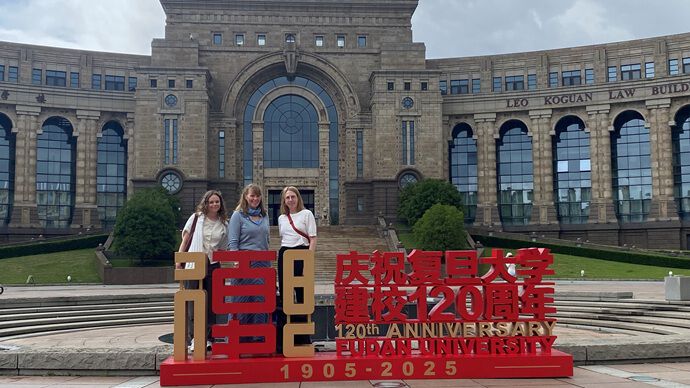
Two representatives from the NCHR and two European academics also visited Fudan University in Shanghai. During two seminars Prof. Rhona Smith (Newcastle University) and Senior Lecturer Lea Raible (Glasgow University) gave classes on ‘Development and Displacement: cultural challenges for human rights’ and ‘Applying Human Rights to Climate Change Impacts: The Problem of Extraterritoriality’, respectively.
The presentations were met with great interest from students and fellow academics. After each presentation, there were interesting discussions on the issues of climate change, displacement and the role of leading state powers in the world.
A continuing process
As a result of the Euro-Sino Forum and the subsequent academic exchanges, the NCHR has been able to foster partnerships between academics and Chinese institutions. The seminar was beneficial for new and old partnerships and the NCHR hopes the forum will contribute towards the development of human rights education in China.
Fostering the knowledge and skills of the next generation of students is crucial for the achievement of human rights and is a primary focus of the NCHR. Looking forward, the NCHR will therefore continue working together with universities in China and in Europe to educate the next generation of leaders in human rights.