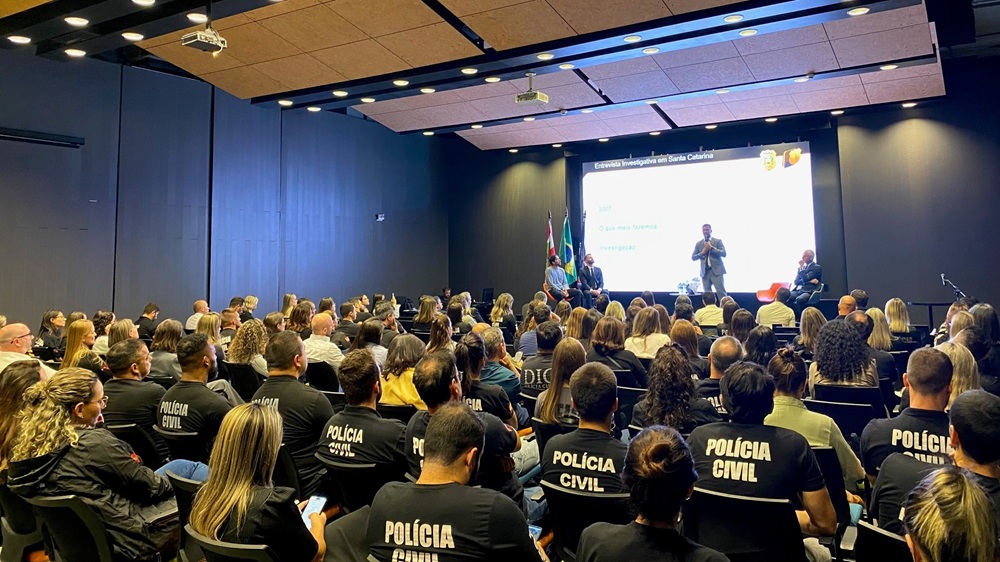
These events, held in Recife and Florianópolis, brought together police instructors, civil police officers, researchers, and justice professionals from across Brazil. Representatives from 14 states in total gathered to showcase and discuss ethical, evidence-based interviewing practices.
Organised in collaboration with the Laboratory for Teaching and Research in Cognition and Justice (CogJus), the University of Portsmouth, and supported by the UK-Brazil Global Talent Exchange Scheme (UKRI), and NCHR, the initiative focused on training, knowledge exchange, and the development of sustainable practices in investigative interviewing.
A Week of Learning and Innovation
The programme featured three major events:
- Two National Seminars on Investigative Interviewing in Recife and Florianópolis focused on training instructors from police academies using a tiered training model, with sessions led by international expert Professor Becky Milne.
- International Seminar on Investigative Interviewing: New Techniques for Hearings and Interrogations. Open to the broader public security community, this seminar explored global perspectives and local applications of investigative interviewing.
- International Meeting on Investigative Interviewing: Theory, Practice, and Innovation: A public event in Florianópolis that highlighted the role of research, witness identification procedures, and the impact of investigative interviewing on Brazil’s judiciary.
Promoting Human Rights and Ethical Policing
Investigative Interviewing is a scientifically grounded, non-coercive method for gathering accurate and reliable information from victims, witnesses, and suspects. It aligns with the Méndez Principles and international human rights standards, ensuring dignity and fairness in criminal investigations.
- "I am deeply impressed by the substantive discussions on implementation strategies, the significant strides taken already, and the dedication of our Brazilian colleagues to fully adopt effective investigative interviewing in Brazil", says NCHR Senior Adviser Susanne H. Flølo.
The events emphasised the importance of structured training, sustainability metrics, and the integration of research into police practices. Notable contributions came from experts including Professor Rebecca (Becky) Milne, Dr. Renan Saraiva, Dr. William Cecconello, Professor Lilian M. Stein, Dr. Denis Lino, Anselmo Cruz, Professor Marcos Hoffmann, Mayra dos Santos Zavattaro, Fernando Guzzi, Dr. André Luiz Bermudez Pereira (Director of Acadepol), Susanne Flølo, and several Brazilian professionals deeply engaged in reforming investigative practices.
A Collaborative Effort
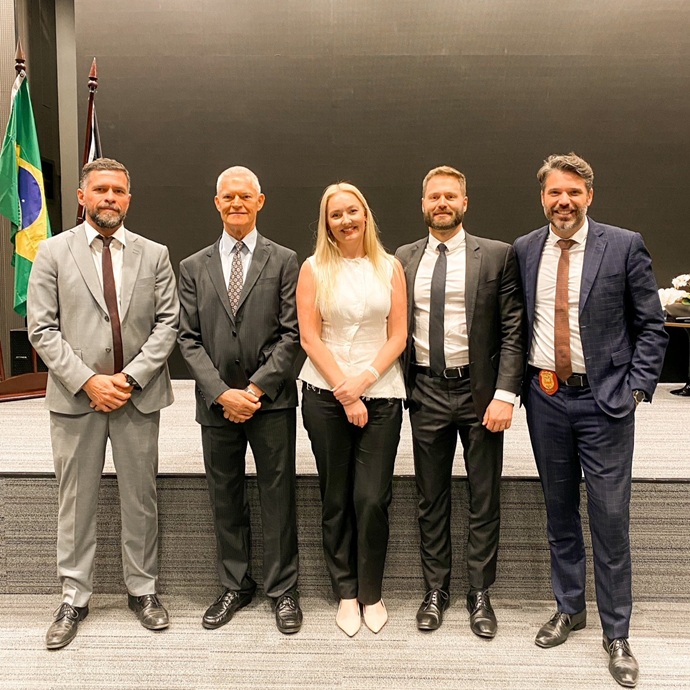
This initiative was made possible through the support of local institutions such as the Civil Police of Santa Catarina, the Police Academies of Santa Catarina and Recife, and ADEPPE. Their collaboration ensured the events were not only informative but also deeply rooted in the Brazilian context.
Looking Ahead
The NCHR extends its heartfelt thanks to all colleagues and Brazilian partners for their dedication and teamwork. These events mark a significant step forward in promoting ethical, effective, and human rights-based policing in Brazil. The NCHR looks forward to continuing this vital collaboration and exploring new opportunities to support justice and human rights globally.