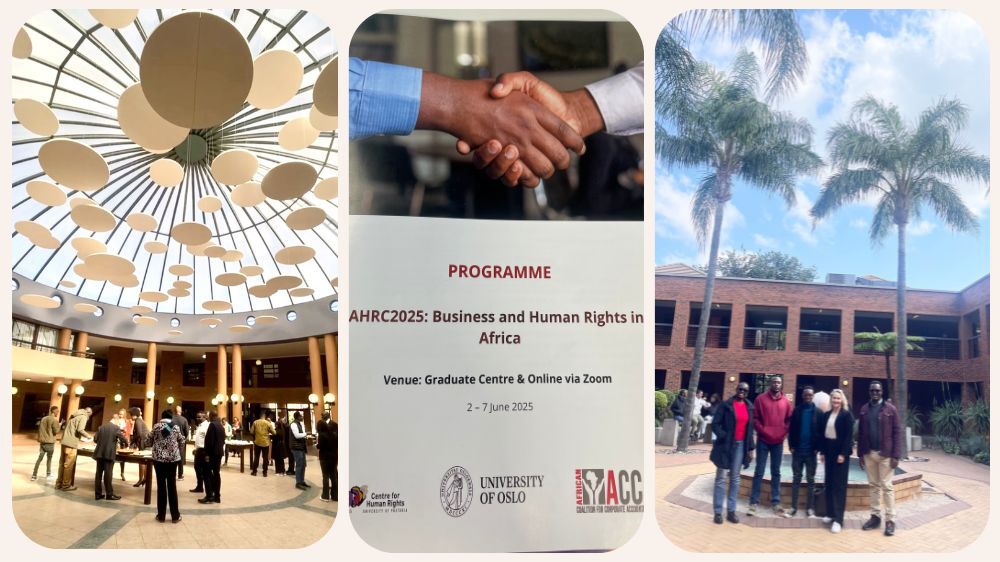
The new initiative is a collaboration between the Norwegian Centre for Human Rights (NCHR) at the University of Oslo and the Centre for Human Rights at the University of Pretoria. Although the two centers have worked together for years, this is the first collaboration of its kind for the NCHR's International Department, funded by the Norwegian Directorate for Development Cooperation (NORAD).
Advanced training for African experts
During the week, over 60 participants from 18 African nations gathered (both in-person and virtually) to engage in a comprehensive program that explored the relationship between business activities and human rights in Africa. Participants came from academia, government, and civil society, many of whom are already involved in business and human rights initiatives.
Mixing theory and practice
The course included targeted modules on global and regional business and human rights standards, climate change, due diligence, sustainability, land rights in conflict areas, gender and human rights, workers’ rights and forced labor, and access to justice for victims of corporate human rights violations. Lecturers and experts provided a blend of theoretical knowledge and practical insights, offering a nuanced perspective on the challenges and opportunities for promoting business and human rights.
Sectoral challenges in the textile industry
Several lectures focused on specific sectoral challenges, such as the textile and garment industry. One session featuring presentations from both Chinese and African experts. The NCHR, through its established Chinese expert network, facilitated lectures from Chinese experts representing the employer side.
“This session drew particular interest, as it was the first time for many of the African experts to hear a Chinese perspective on business and human rights and engage in discussions about Chinese policies in this field,” said Cecilie Figenschou Bakke from the NCHR.
Field visit to a South African mining company
A notable highlight of the program was a full-day visit to Sibanye-Stillwater, where participants got to learn about ongoing due diligence and human rights work in the mining sector. Spending the day outside Johannesburg, the participants gained valuable insights into the operations of a mining company, marking the first visit to such a facility for many attendees.
New networks for meaningful change
The quality of dialogue and level of participation throughout the whole week indicated the emergence of a robust network dedicated to creating positive change in the business and human rights landscape in the region. A follow-up program, including seed grants for targeted research projects, will be offered to participants after the training. Plans for a follow-up training for a new cohort of African experts are already underway for 2026.