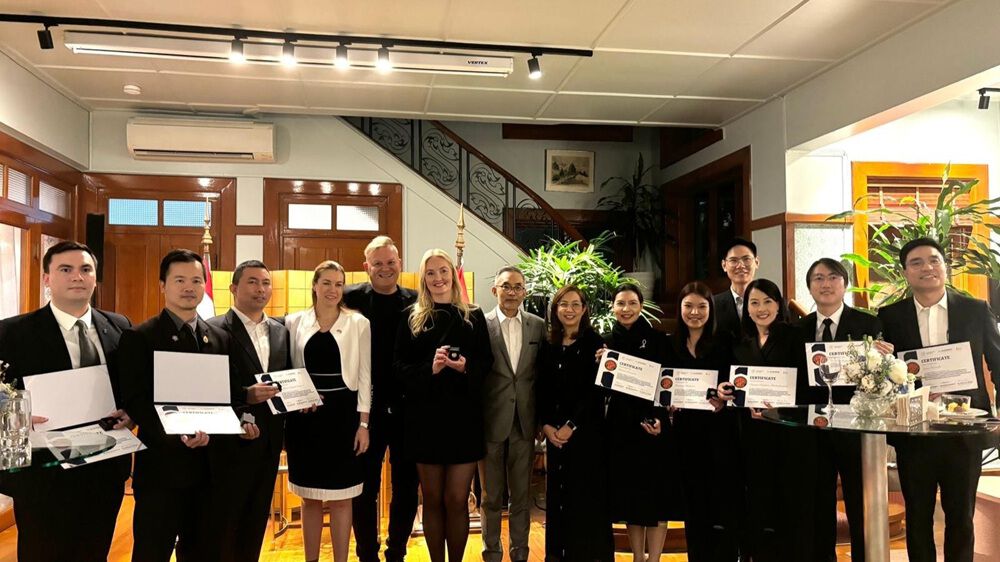
The gathering brought together policymakers, law‑enforcement leaders, academics, and justice‑sector professionals to reflect on achievements, share experiences, and chart a collaborative path forward.
The evening opened with remarks from Thea Martine Ottmann, Norway’s Chargé d’Affaires a.i., who underscored the significance of the long‑standing diplomatic partnership built on dialogue, trust, and shared values. Her welcome set the tone for an event focusing not only on historical ties, but on the practical outcomes of sustained cooperation.
In a contextual introduction, Dr. Ivar Fahsing traced the evolution of investigative interviewing—from Norway’s early development of evidence‑based methods to Thailand’s enthusiastic large‑scale adoption. He stressed that investigative interviewing is far more than a technical reform: it is a reflection of a justice system’s values, influencing both fairness and the quality of evidence.
A panel that captured Thailand’s energy and engagement
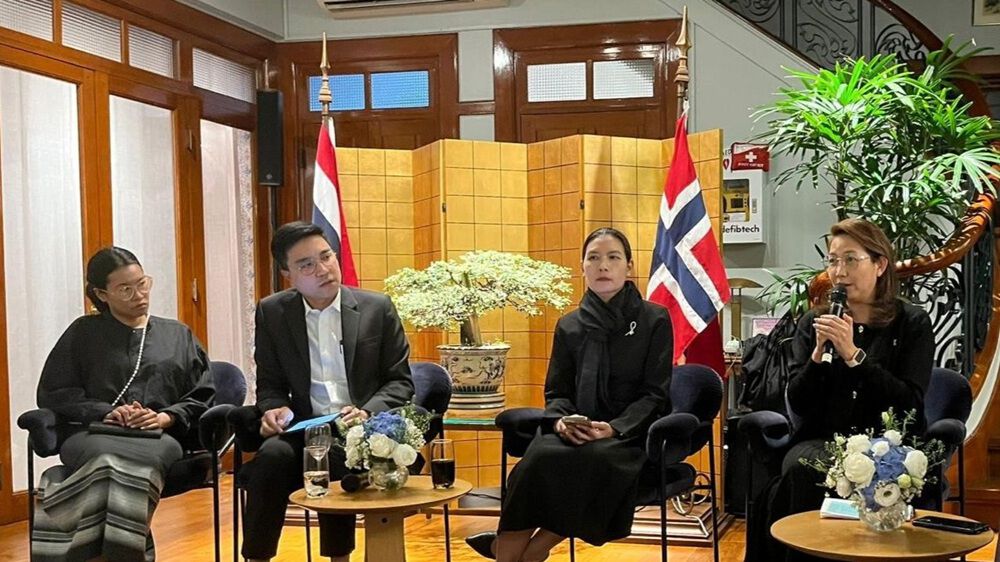
The centerpiece of the evening was a particularly engaging and emotional panel discussion, moderated by Susanne H. Flølo, Senior Adviser, NCHR. The panel brought out strong reflections from panelists on Thailand’s progress, challenges, and aspirations.
Panelists included:
- Dr. Anuwan Vongpichet (TIJ), a leading advocate for rights‑based interviewing and capacity‑building across Thailand and the Asia‑Pacific.
- Santanee Ditsayabut (Nitivajra Institute, Office of the Attorney General), who has played a pivotal role in integrating evidence‑based interviewing into prosecutorial and investigative frameworks.
- Mr. Gunn Sirisingha (Department of Special Investigation), instrumental in operationalising these methods within frontline law‑enforcement practice.
Together, they delivered a conversation that resonated strongly with the audience. Many noted that the discussion reflected Thailand’s genuine engagement and emotional investment in advancing humane, science‑based interviewing practices. Topics ranged from large‑scale institutional reforms and inter‑agency cooperation to challenges of nationwide implementation and lessons learned for the broader region.
Audience questions added depth, touching on scaling of training, sustainability of reforms, and the need for consistent application across justice actors.
Recognising contributions and looking ahead
Following the panel, a certificate ceremony acknowledged key Thai individuals whose work has propelled investigative interviewing forward in Thailand. The ceremony symbolised both achievement and ongoing momentum.
The reception that followed provided a space for informal dialogue, where participants exchanged experiences and reflected on upcoming milestones, including the rollout of UNODC’s new e‑learning on Investigative Interviewing and the forthcoming Thai‑language edition of the UN Investigative Interviewing Manual.
A milestone in a continued journey
The event marked a significant moment in Thailand–Norway cooperation, illustrating how bilateral partnerships can contribute to tangible improvements in justice practices. Thailand’s progress in adopting evidence‑based, non‑coercive interviewing has positioned the country as a regional leader, and both nations reaffirmed their commitment to continuing this trajectory.
As Thailand and Norway move forward, the collaboration stands as a powerful example of how shared values—human rights, fairness, and professionalism—can translate into meaningful and lasting justice reform.